


I cook fish for a living, so seafood dishes rarely surprise me. But halibut cheeks with piccata sauce? Absolutely blew me away. The combination of tender, sweet fish with a light, crispy crust and a bright, lemony sauce is spectacular.
I first made this recipe during a holiday trip back to the States using wild-caught Alaskan halibut cheeks from Sena Sea for family dinner, and it was hands-down my favorite meal of the entire visit. Everyone went back for seconds. And a few lucky buggers made it to thirds.
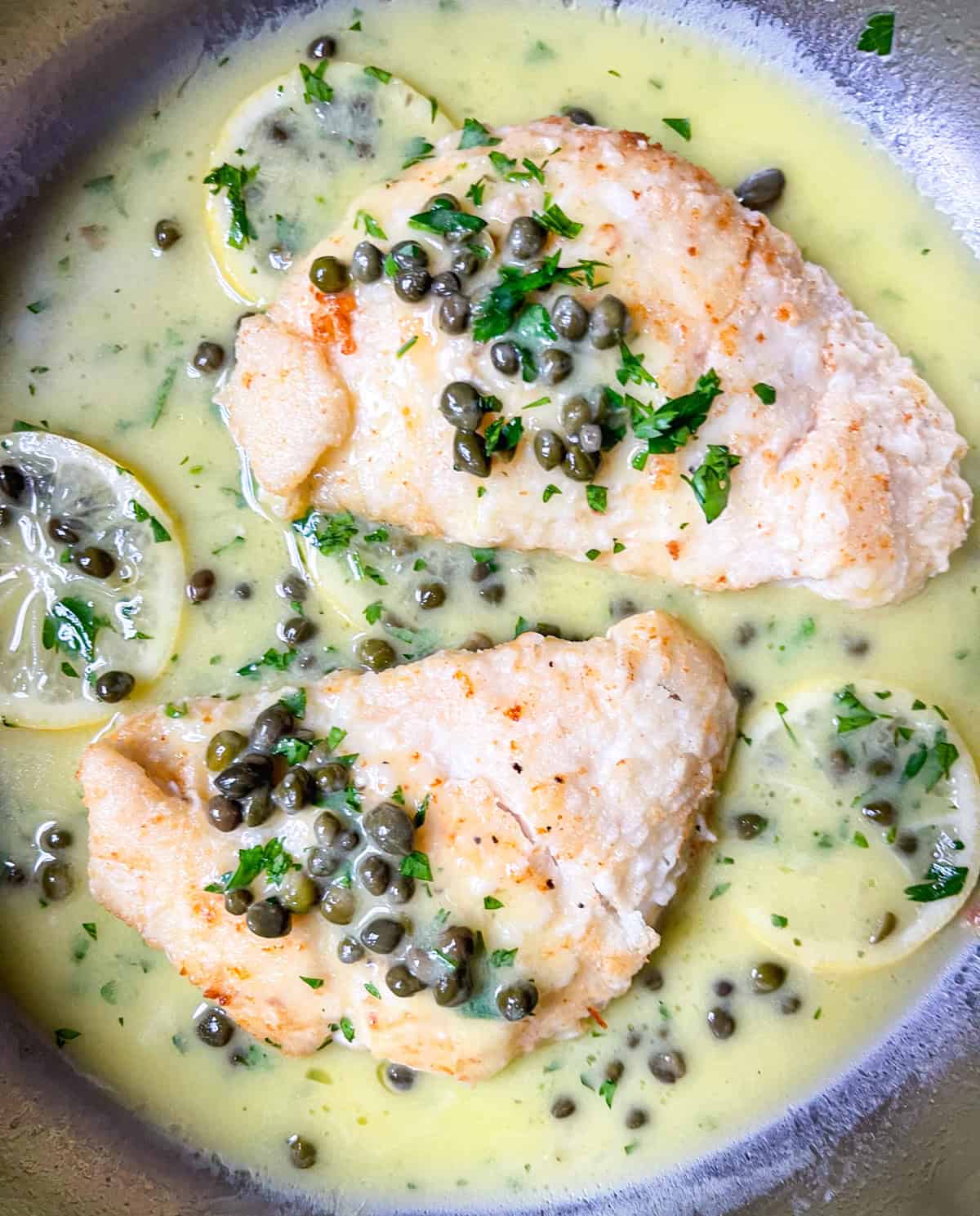
The secret to that professional-looking golden crust comes from a technique I learned studying how Le Bernardin - arguably America's best seafood restaurant - prepares their salmon: using Wondra flour to create a barely-there crispy exterior that lets the sweet flavor of the halibut shine through.
Can't find Wondra? Rice flour is your next best option, or use all-purpose flour for a slightly thicker (but still delicious) crust.
The Size Variance Issue
One quirky feature about halibut cheeks is their size can vary wildly in a single package - from saucer-sized pieces to delicate scallop-sized ones. I've worked out the timing for both in this recipe so you can nail it on your first try.
Love piccata sauce? Try my Flounder Piccata next! Or grab the Piccata Sauce Recipe to coat chicken cutlets.
How to Make Halibut Cheeks
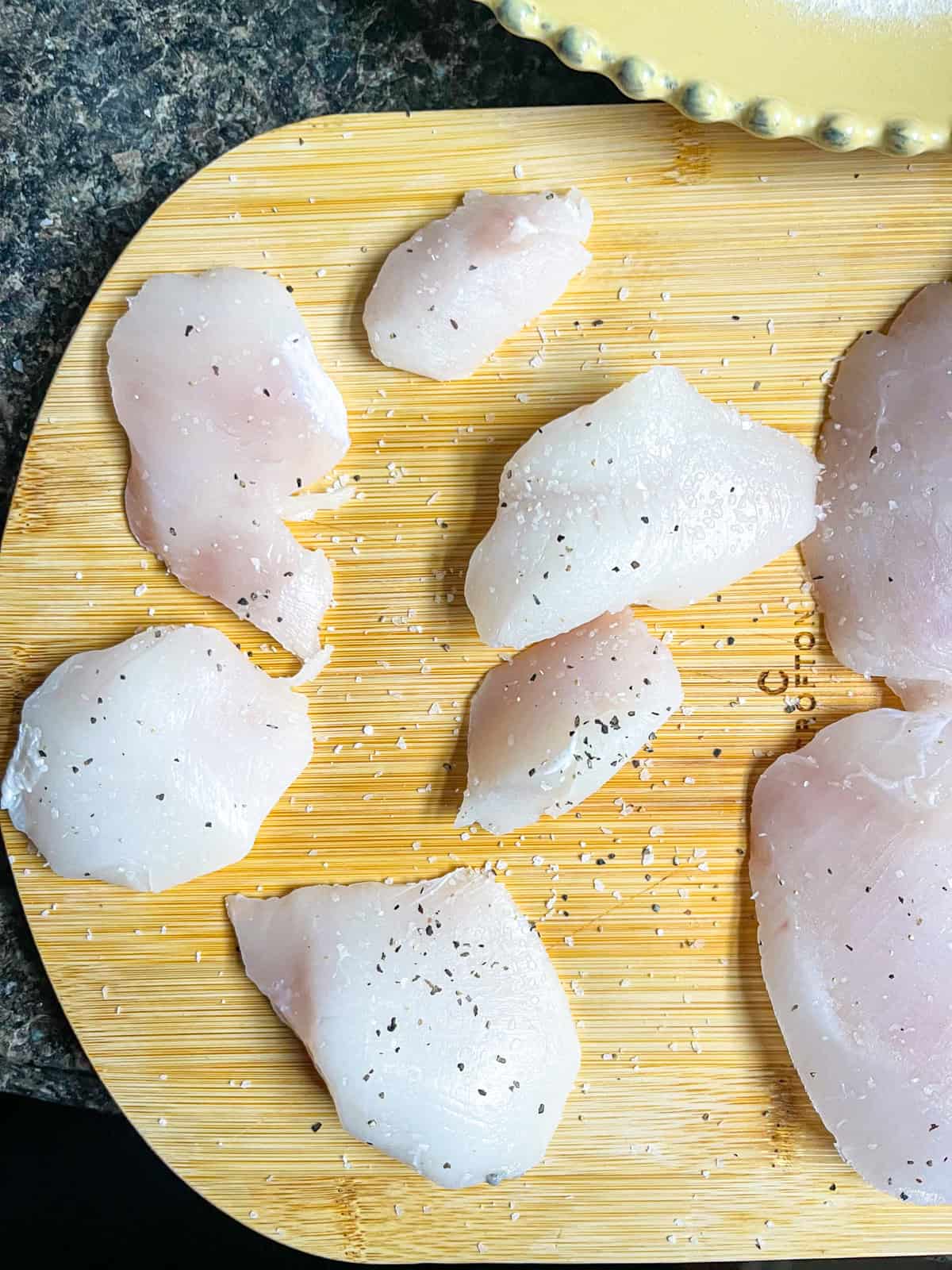
Prep the fish: Dry halibut cheeks thoroughly with paper towels. Season both sides with salt and pepper, then coat lightly in Wondra flour.

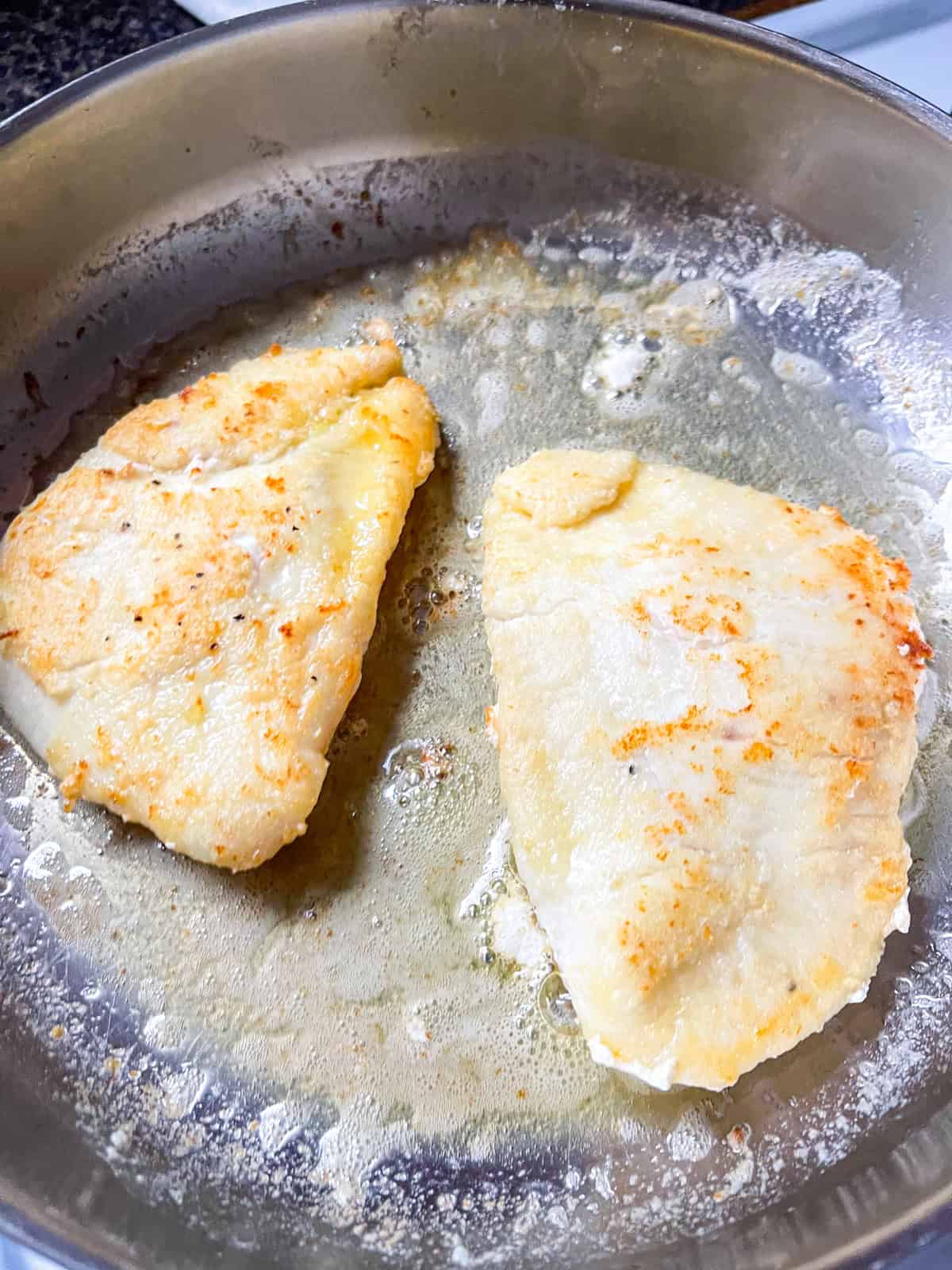
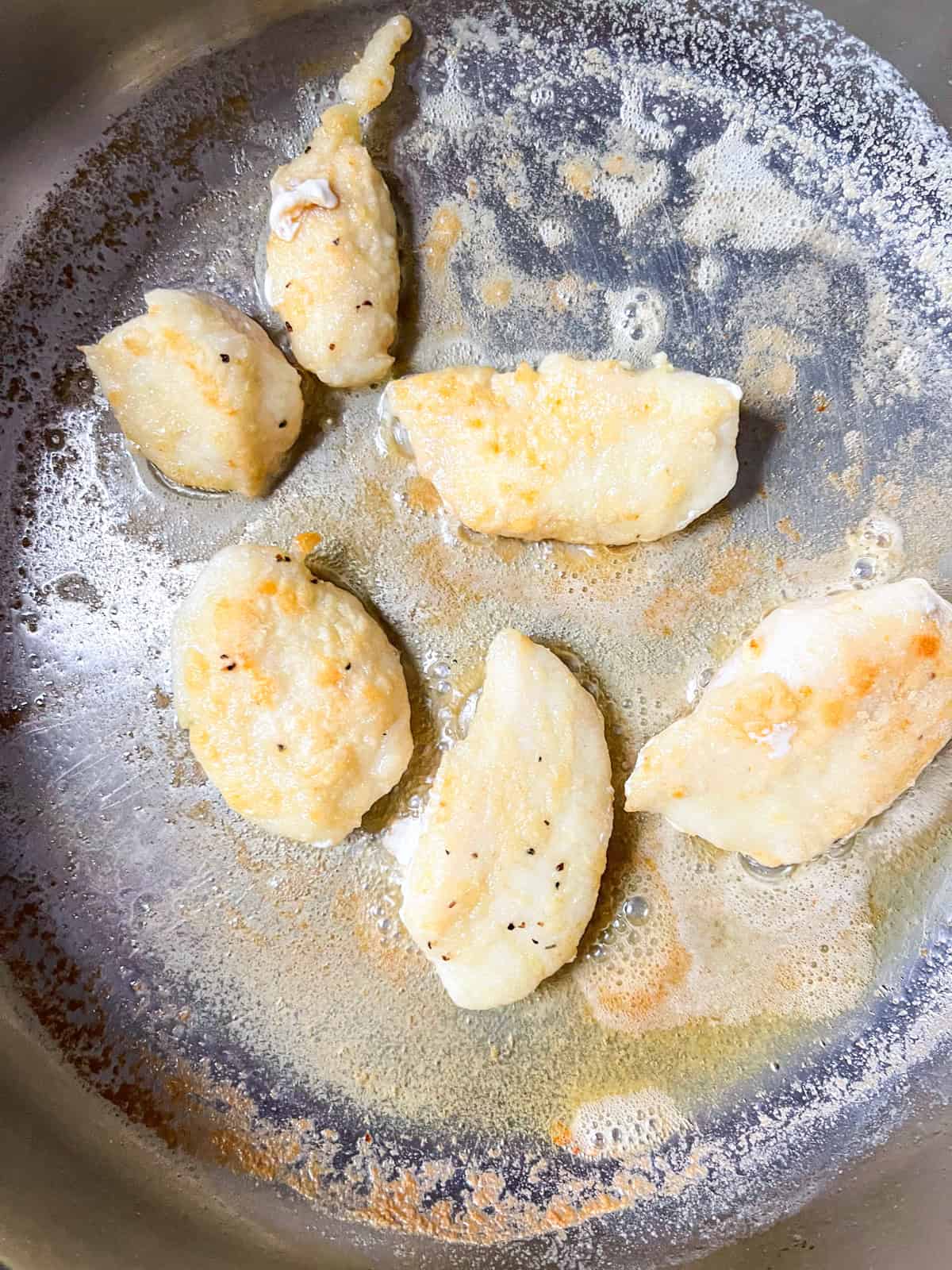
Sear the cheeks: Sear fish just until cooked through. For large pieces: cook 3-5 minutes first side, 2 minutes second side. For smaller pieces: cook 2 minutes first side, 1 minute second side. Transfer to a plate and tent with foil.
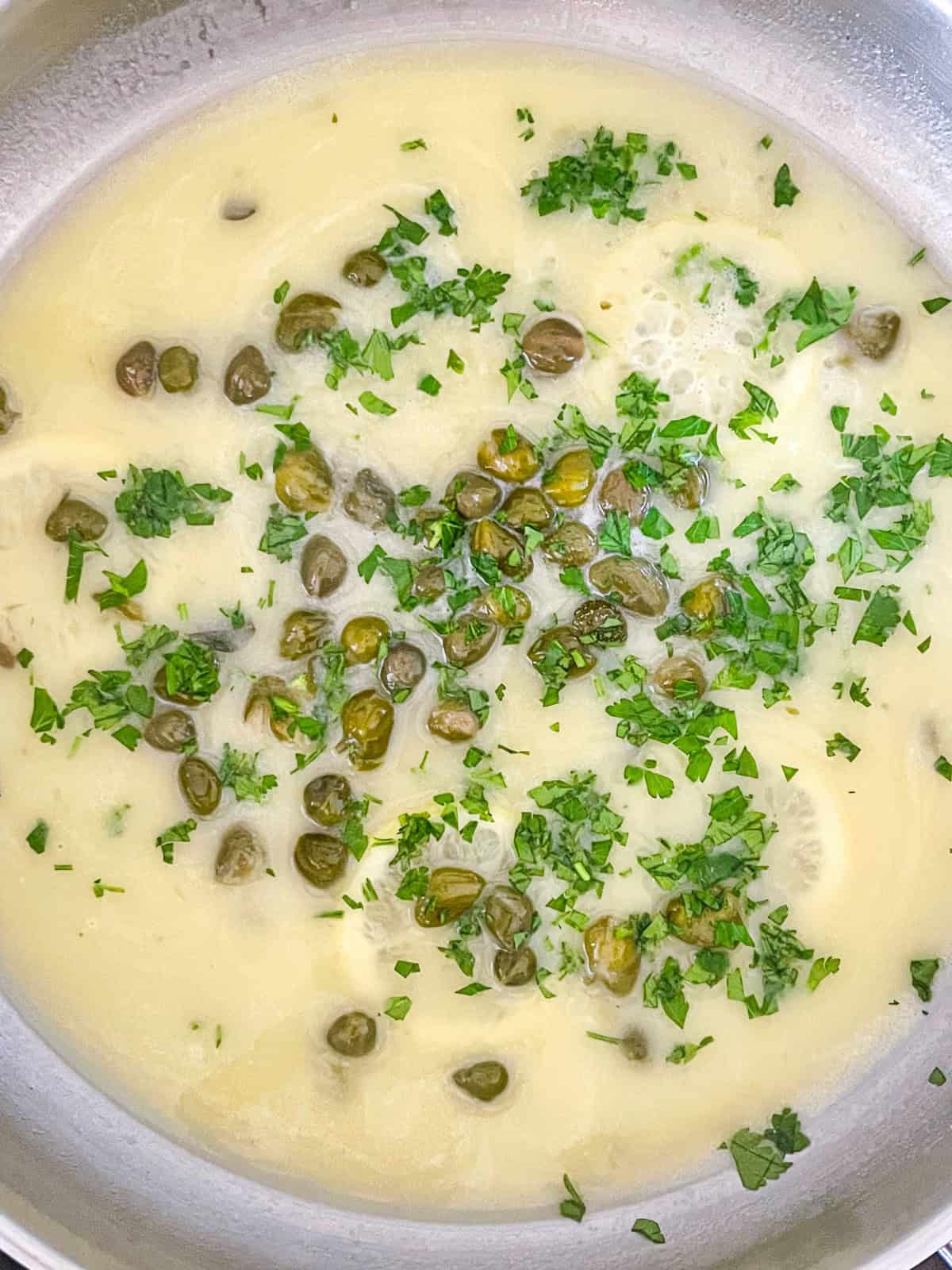
Build the sauce: Wipe out skillet and return to stove. Add 1 tablespoon butter, 3-4 lemon slices, and wine. Reduce by one-third. Add stock and capers, cooking 2 minutes. Whisk in remaining 3 tablespoons cold butter plus the tablespoon of butter mixed with ½ teaspoon flour. Cook until sauce thickens.

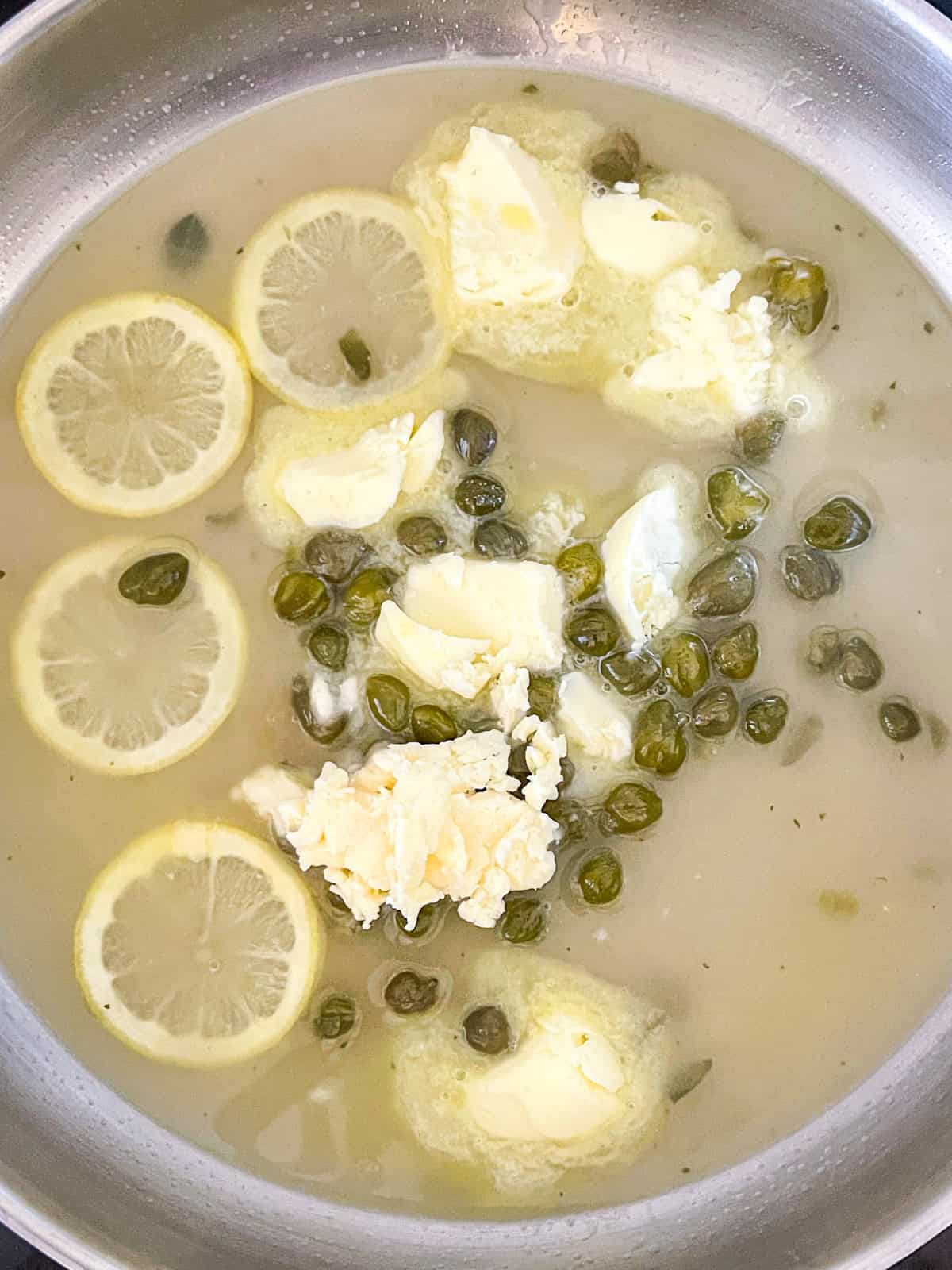
Serve: Remove from heat, stir in parsley, and taste for seasoning. Drizzle halibut cheeks generously with piccata sauce. Garnish with lemon slices and extra parsley.

What do halibut cheeks taste like?
Halibut cheeks have a sweet, mild flavor similar to scallops with a texture similar to sea scallops or crab (tender and slightly stringy / textured). They're more delicate than halibut fillets and the taste is clean and oceanic without being fishy.
Can I use frozen halibut cheeks?
You know it! Frozen halibut cheeks work perfectly for this recipe - just thaw them completely (in the refrigerator overnight, or in packaging in cold water for 30-45 minutes). The key to using frozen seafood is once it's thawed, be sure to dry it extremely well with paper towels before seasoning and cooking to ensure you get a good crust.
How do I know when halibut cheeks are done?
The fish should feel firm to the touch (not squishy) and be opaque all the way through. If you have an instant-read thermometer, you're looking for 135-140°F internal temperature (carryover cooking will take it to 145°F). The exterior should be golden brown with a light crust.
What should I serve with halibut cheeks?
I love serving these with simple sides that compliment the bright piccata sauce. I often serve with mashed potatoes or rice, along with grilled asparagus or roasted green cauliflower.
Conclusion
This is one of those recipes that looks and tastes way more complicated than it actually is. The key is getting a good sear on the fish and not overthinking the sauce - it comes together fast once you start. Just remember to adjust your cooking times based on the size of your cheeks, and you'll have restaurant-level fish on the table in under 30 minutes.
Print
Halibut Cheeks with Piccata Sauce
- Total Time: 25 minutes
- Yield: 3-4 1x
Description
Pan-seared halibut cheeks with a restaurant-style piccata sauce featuring white wine, butter, capers, and lemon. A simple but spectacular seafood dinner.
Ingredients
- 1 lb halibut cheeks
- ¼ cup Wondra flour (substitute rice flour or all-purpose flour)
- ½ teaspoon kosher salt
- ¼ teaspoon black pepper
- 1 tablespoon olive oil
- 5 tablespoons butter, divided
- 1 tablespoon butter mixed with ½ teaspoon all-purpose flour
- ⅓ cup white wine
- ¼ cup vegetable stock
- 2 tablespoons capers
- 1 small lemon, sliced thin
- 2 tablespoons flat leaf parsley, diced
Instructions
- Pat halibut cheeks completely dry with paper towels. Season both sides with salt and pepper. Coat each piece lightly in flour and gently shake off excess.
- Heat olive oil and 1 tablespoon butter in a large skillet over medium-high heat. Add fish in a single layer without overcrowding (cook in batches if necessary). Cook times vary by size: For large, fillet-sized pieces, cook 3-5 minutes on the first side until almost cooked through, then flip and cook 2 minutes more. For smaller, scallop-sized pieces, cook 2 minutes first side and 1 minute second side. Fish should have a golden crust and firm texture when done. Transfer to a plate and tent with foil.
- Wipe out skillet to remove any flour crumbs, then return to medium heat. Add 1 tablespoon butter, 3-4 lemon slices, and wine. Bring to a boil and cook until reduced by one-third, about 2 minutes.
- Add vegetable stock and capers. Cook 2 minutes to reduce slightly. Add remaining 3 tablespoons cold butter and the butter-flour mixture. Whisk continuously until butter melts and sauce thickens, 2-3 minutes. Remove from heat and stir in parsley. Taste and adjust seasoning as needed.
- Serve halibut cheeks with generous drizzle of piccata sauce. Garnish with lemon slices and additional parsley.
Notes
- Size matters: Halibut cheeks can vary dramatically in size. Adjust cooking times accordingly - larger pieces need more time, smaller pieces cook fast. Watch carefully to avoid overcooking.
- Wondra flour: creates the crispiest, most professional crust with minimal coating. Substitute rice flour for similar results or all-purpose flour for a slightly thicker crust.
- Clean pan for sauce: Wiping out your skillet before making the sauce prevents cloudiness and any burnt flavor.
- Beurre manié (the butter-flour mixture) thickens the sauce to perfect consistency. Mix it together before you start cooking for easy whisking at the end.
- Don't skip the dry: Thoroughly drying the fish is critical for achieving a golden crust. Any surface moisture will cause steaming instead of searing.
- Prep Time: 10
- Cook Time: 15
- Category: Easy Recipe
- Method: Stove Top
- Cuisine: Italian
Nutrition
- Serving Size: 1
- Calories: 497
- Sugar: 0.3 g
- Sodium: 497.1 mg
- Fat: 42.3 g
- Carbohydrates: 8.8 g
- Protein: 20.5 g
- Cholesterol: 111.7 mg

Kira
Could the first be any firm fish, Haddock, Cod Swordfish?
Christina Jolam
Absolutely - here's a similar recipe on my site using fish fillets with a slightly crispier crust: https://weekdaypescatarian.com/yellowtail-flounder-piccata/ either would be fantastic with the fish you mentioned!