


Fried calamari is one of the few things I'll pull out a pot of oil for. I don't do a ton of deep frying, so when I do, it has to be worth the cleanup. This one is. It took five rounds of testing, changing one thing at a time between the dredge, the batter and the cook time. Turns out the change that made the biggest difference wasn't a fancy batter or a long soak. It was cutting the calamari into wider rings, so the coating turns golden brown before the calamari even thinks about overcooking.
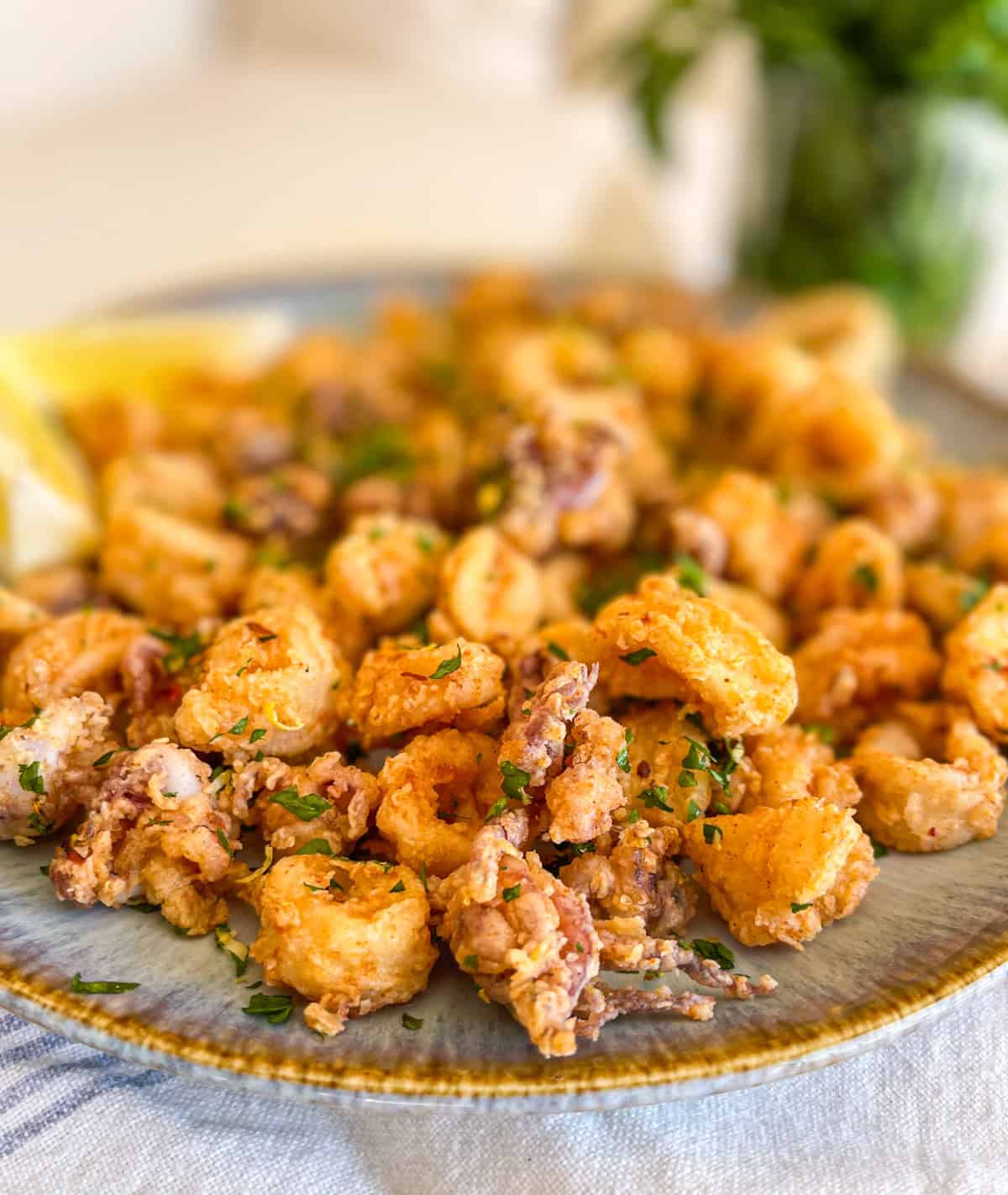
If calamari is your love language, you've got options. Go smoky with my grilled calamari, bold with calamari with feta, chilis and garlic, or all in with Italian stuffed calamari.
Why This Recipe Works
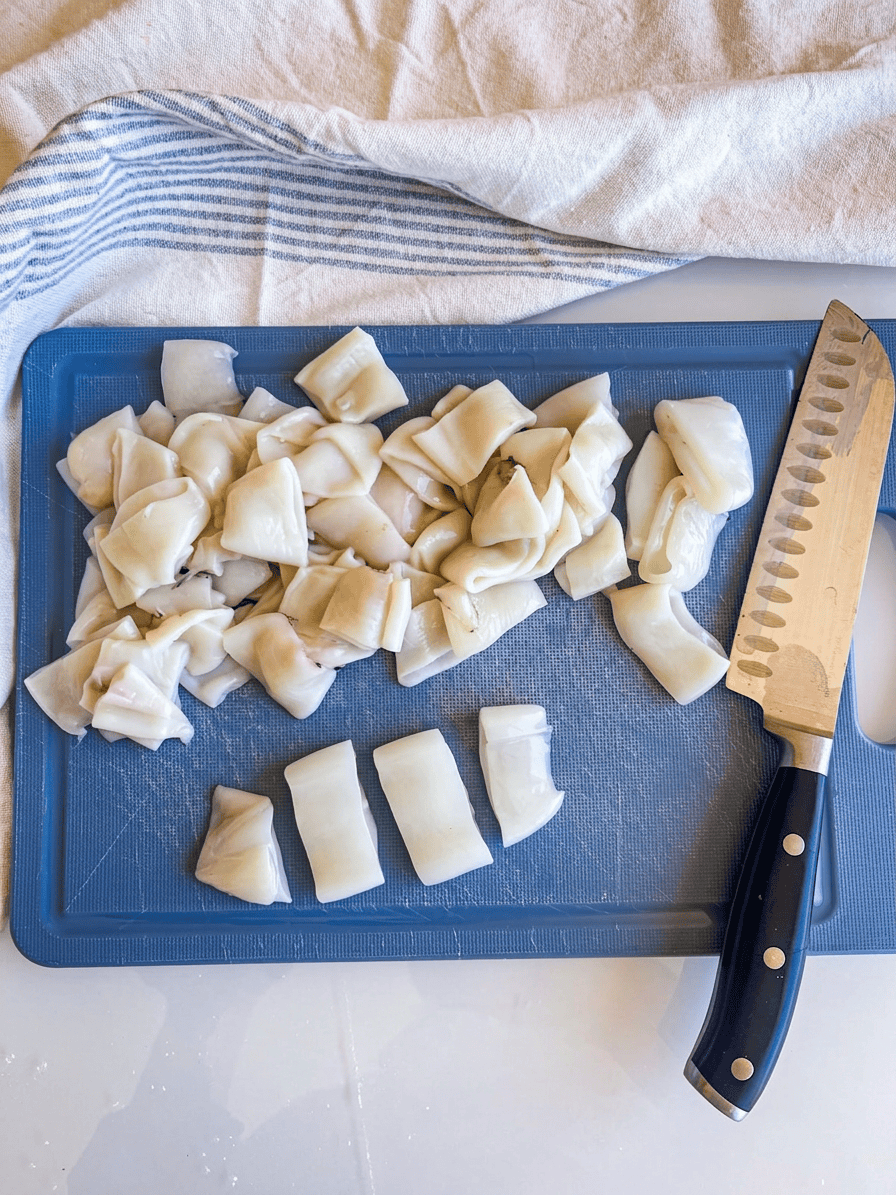
Color mattered a lot to me when I was working on this recipe. I wanted a deep golden brown crunch, and that takes a few minutes in the oil. Thin rings can't handle that amount of time since they cook through in seconds, and by the time the coating is golden and crisp, the calamari has gone full rubbr-band. Cutting the rings to ¾ inch fixes that. Credit where it's due: that idea comes from America's Test Kitchen's research, and my own tests backed it up.
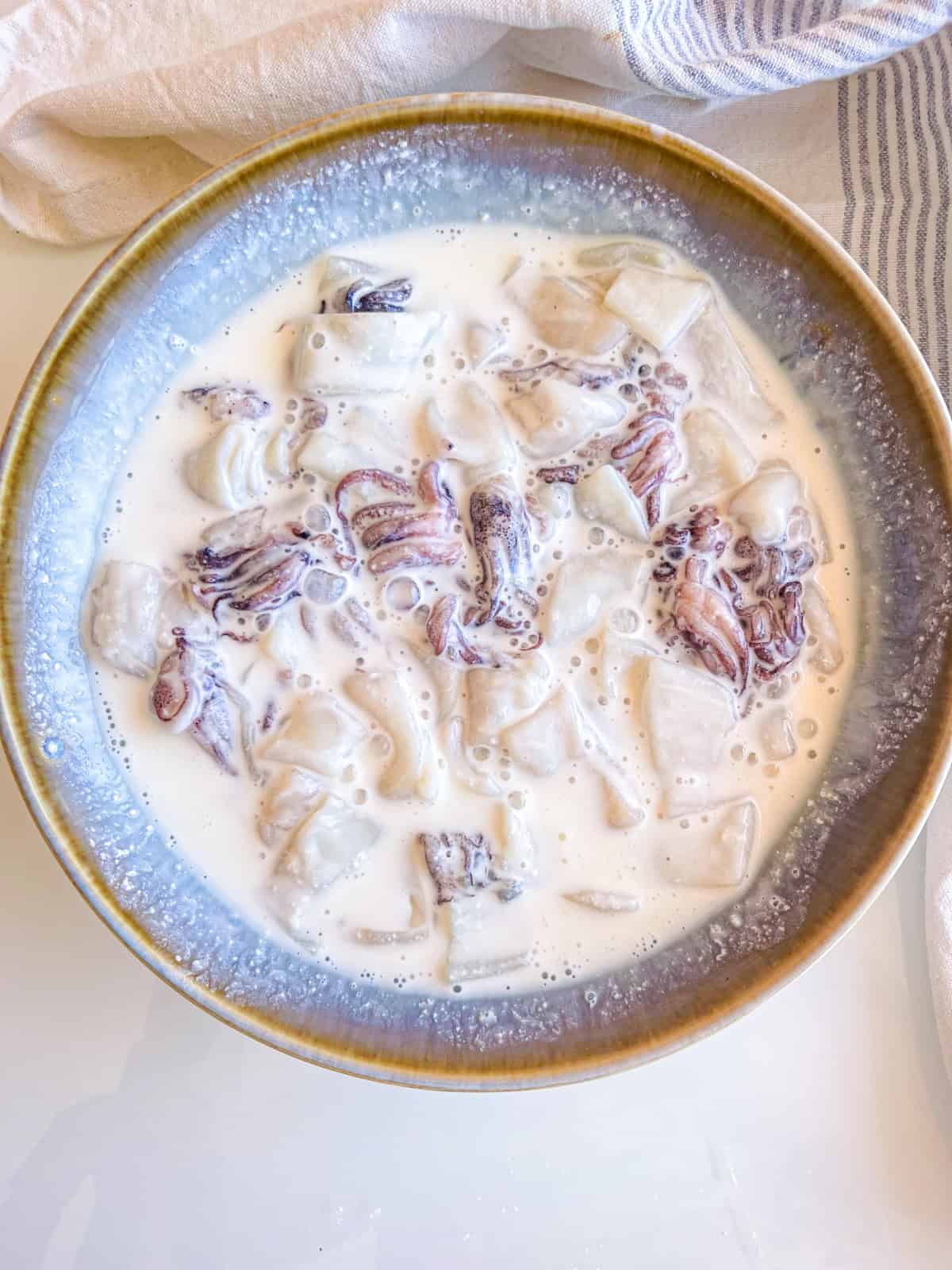
I tested milk and buttermilk for the dredge. Buttermilk was a clear winner in testing. It adds a gentle tang, and the calamari came out better seasoned and more flavorful overall than the milk-only batches. Also absolutely no difference in flavor or texture between a 30-minute soak and a quick dip in the milk. So no soaking required.
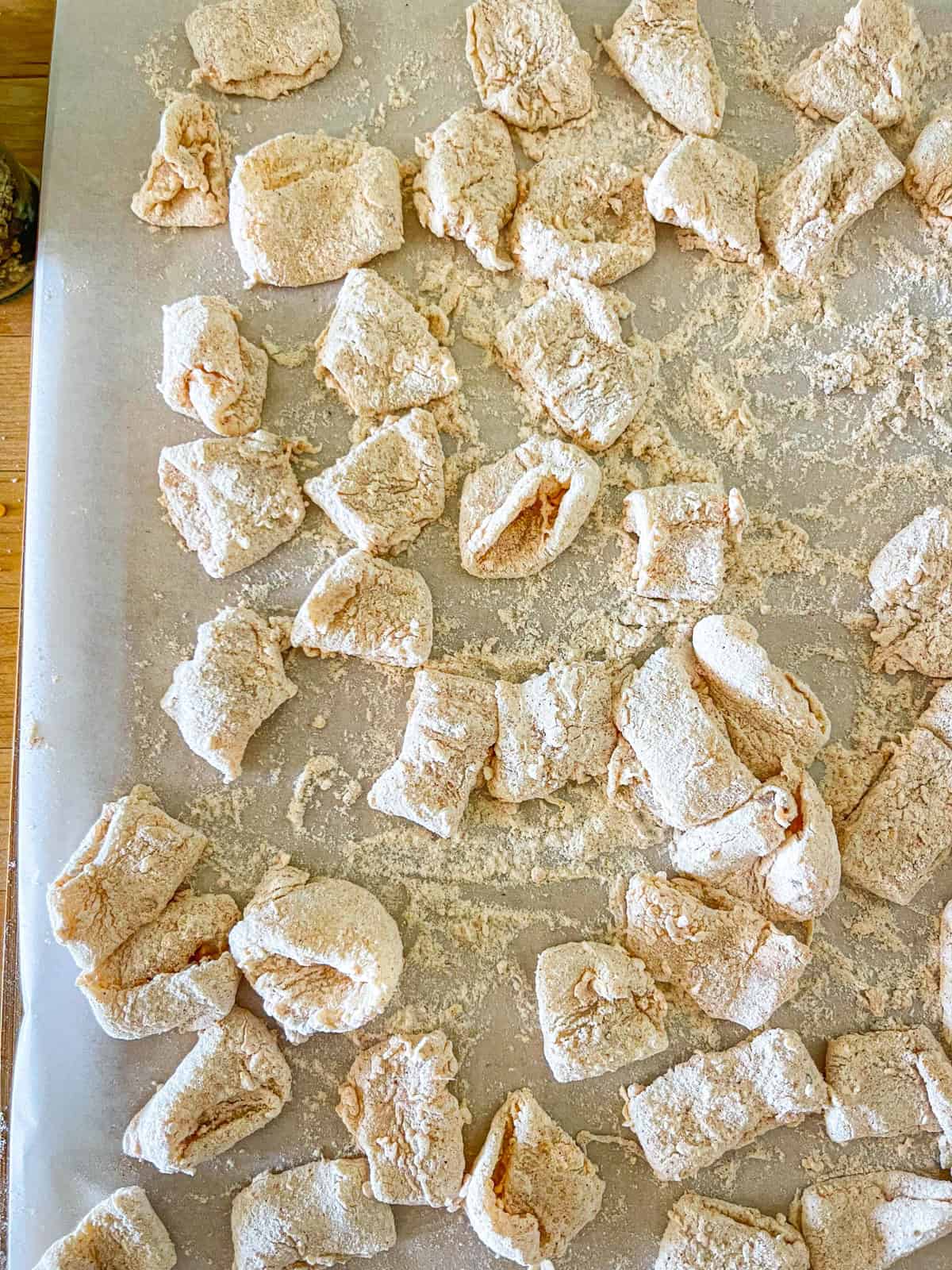
For the savory coating, paprika helps with color, and baking powder handles texture, keeping the coating light and crisp instead of heavy. Flour browns significantly better than cornstarch, so it was the obvious choice. Another big find was letting the breaded calamari rest on parchment for 10 minutes before frying allows the flour to hydrate so it doesn't separate from the calamari when frying.
Ingredients for Fried Calamari
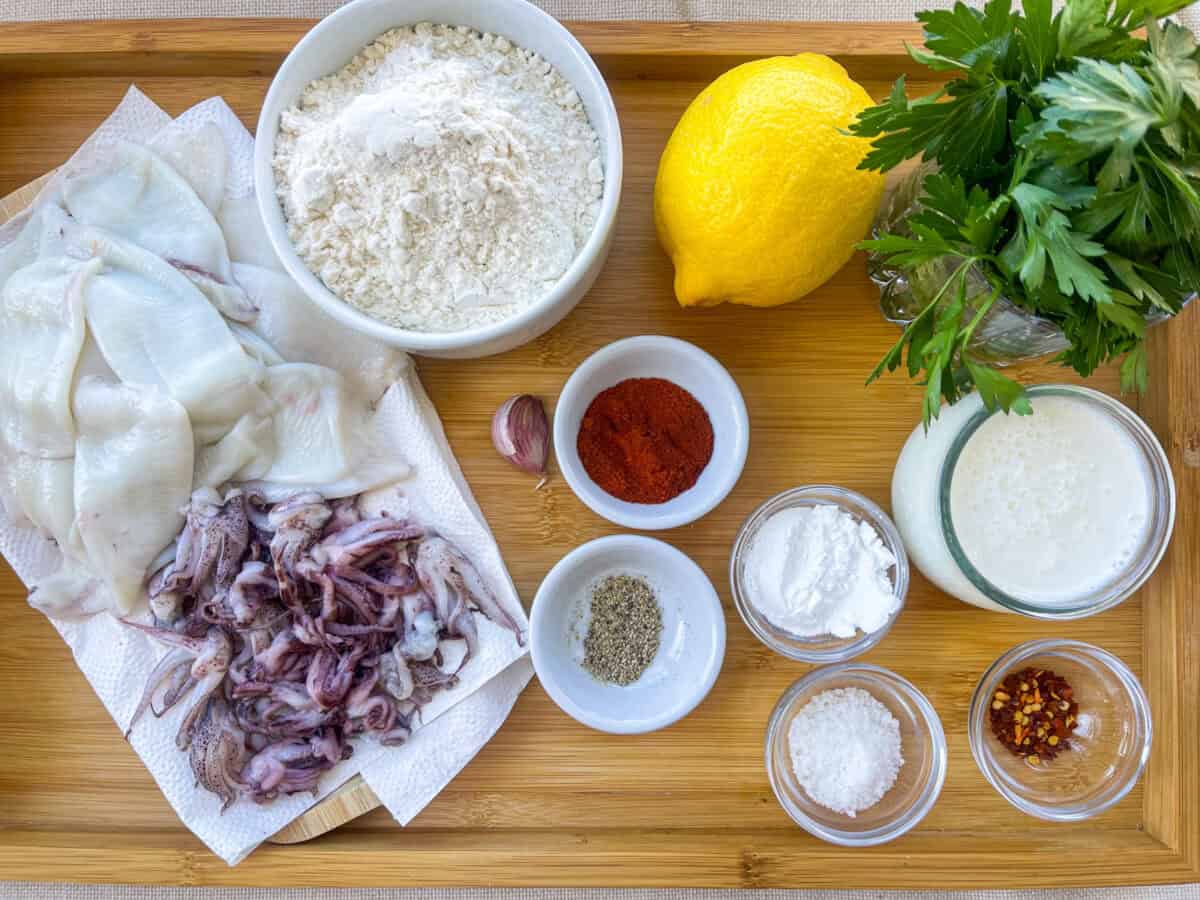
Calamari. Tubes and tentacles are usually sold together, cleaned and ready to cook. Cut the tubes into ¾-inch rings. Leave the tentacles whole, unless you've got an especially long one you want to trim.
Buttermilk. Worth seeking out for flavor. Milk works if that's what you have, but you'll love it even more if you stir 1 teaspoon of lemon juice or vinegar into the milk first and let it sit for 10 minutes.
Flour and baking powder. All-purpose flour is the base. Baking powder keeps the coating light and crisp.
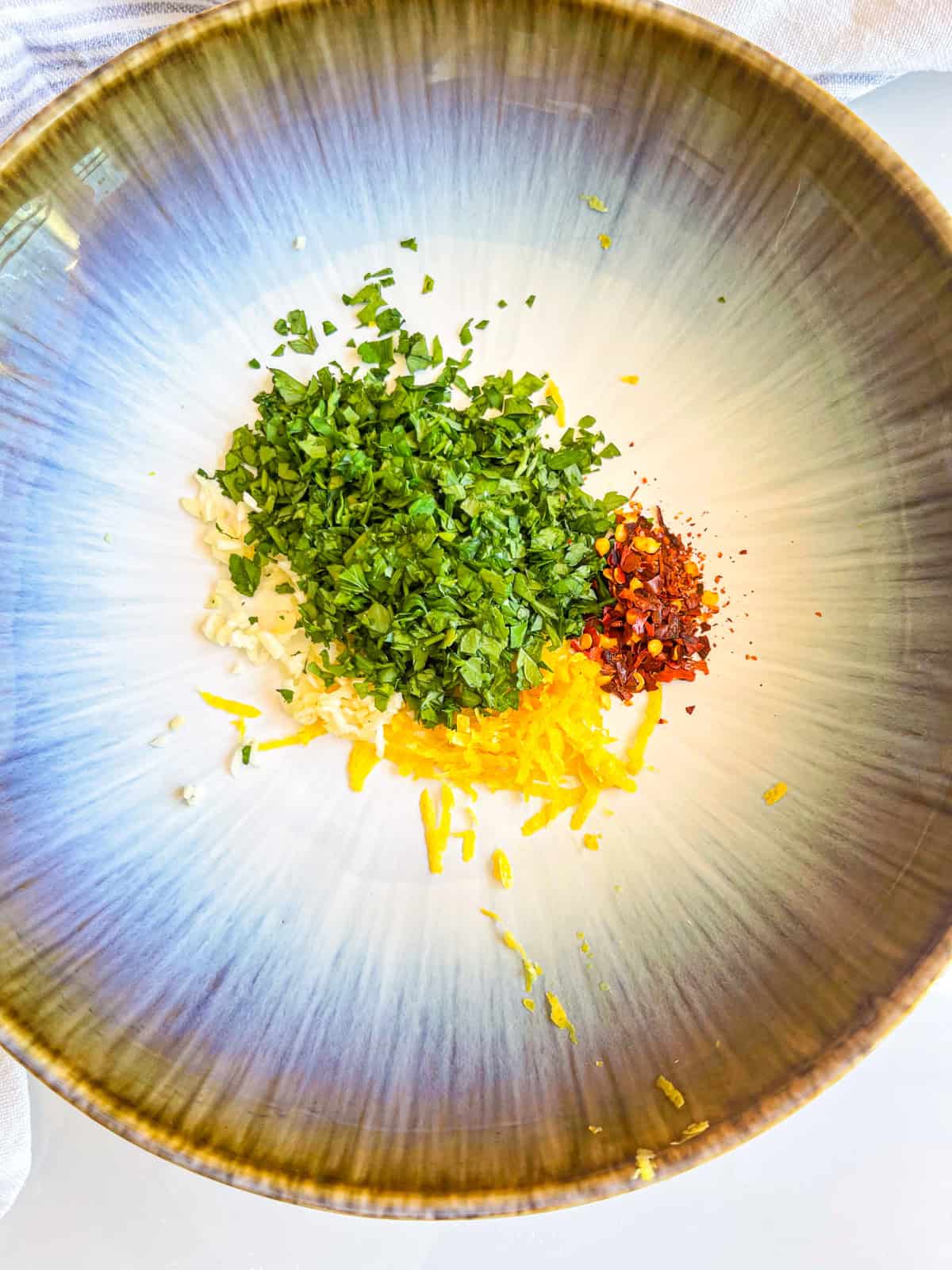
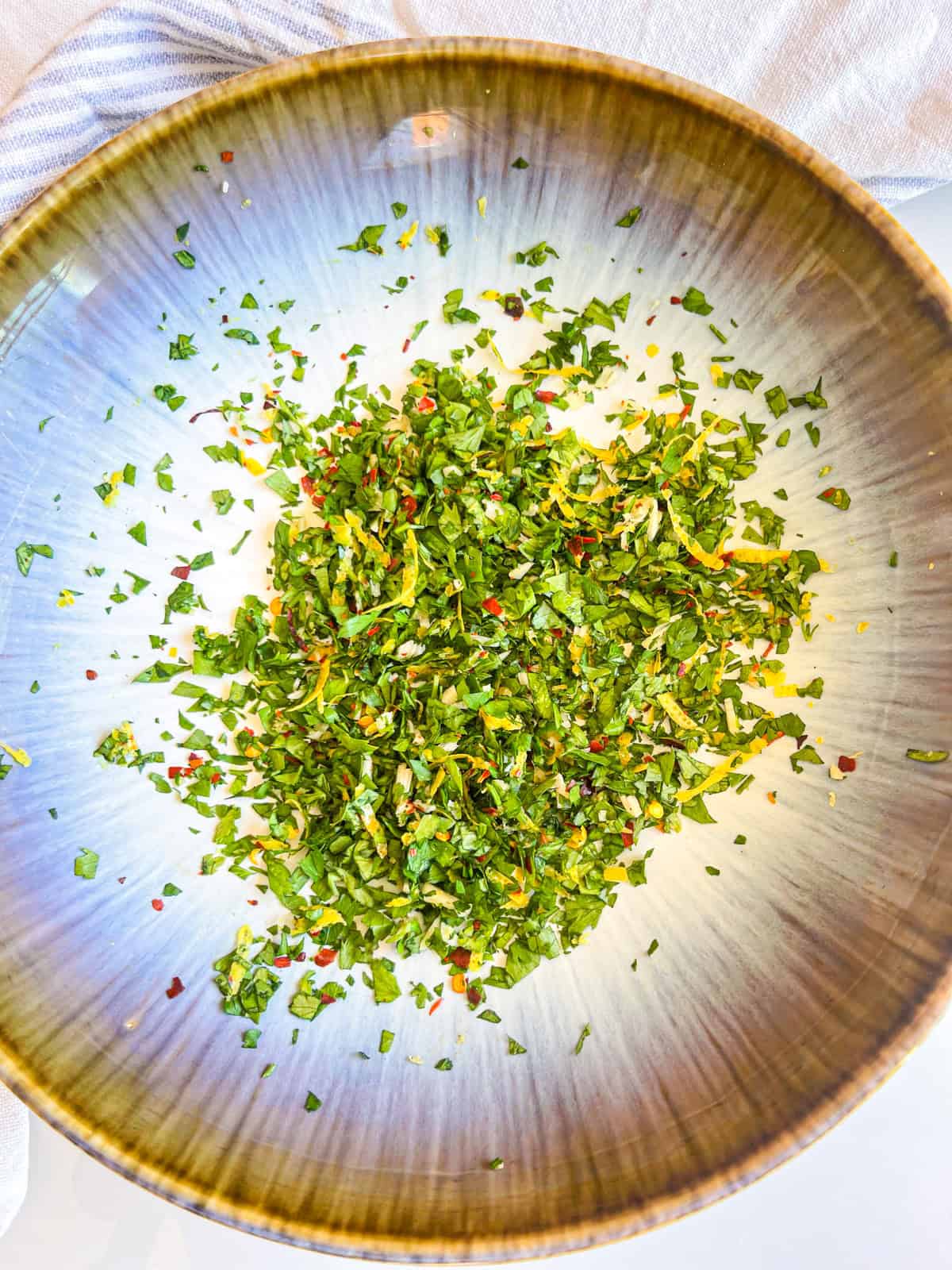
For the gremolata. Gremolata is a classic Italian mix of parsley, lemon zest, and garlic. I add a pinch of chili flakes for a little kick. Keep the garlic small and finely minced or microplaned, since it's raw.
A Few Things That'll Make This Easier
Use a thermometer. Aim for 350 to 360°F. The temperature drops when the calamari goes in, so give it a minute to recover between batches.
Fry in 2 or 3 batches, depending on the size of your pot. Too much calamari at once drops the oil temp, and the coating can turn greasy.
Squeeze off the buttermilk. When you move the calamari to the dredge, give each handful a light squeeze so you're not dragging extra liquid into the flour. Too much liquid turns the dry mix clumpy.
Have your landing spot ready. A rack or paper towels for a quick drain, then straight into the bowl. Fried calamari is best in the first few minutes.
How to Make Fried Calamari
1. Make the gremolata
Combine it right in your serving bowl and set it aside.
2. Dip in buttermilk
Toss the calamari in the seasoned buttermilk. No soaking needed.
3. Dredge and rest
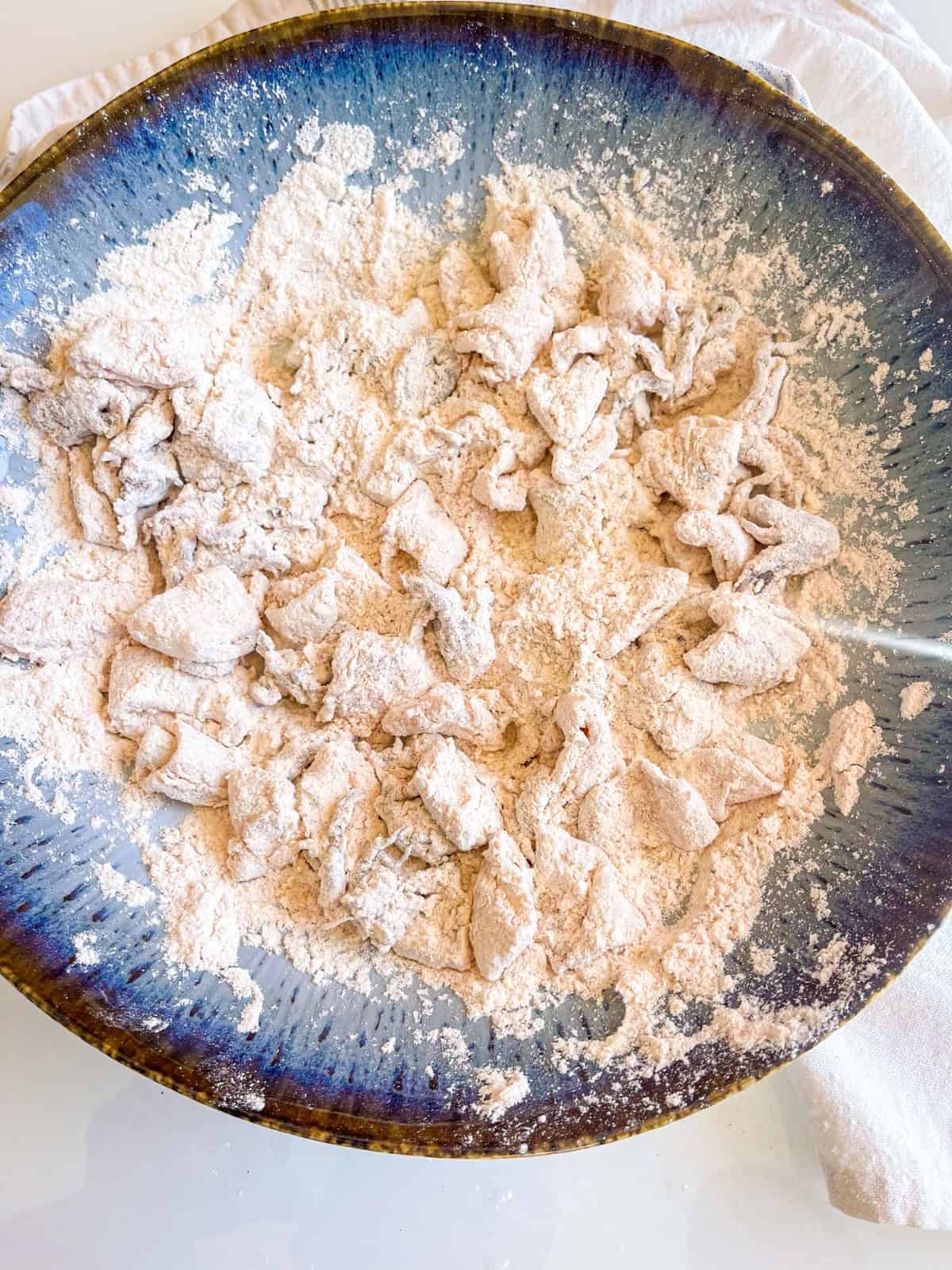
Lift the calamari from the buttermilk, squeeze off the excess, and coat in the flour mixture. Let it rest on parchment for 10 minutes.
4. Fry in batches
Two or three batches for about 3 minutes each, until deep golden brown.
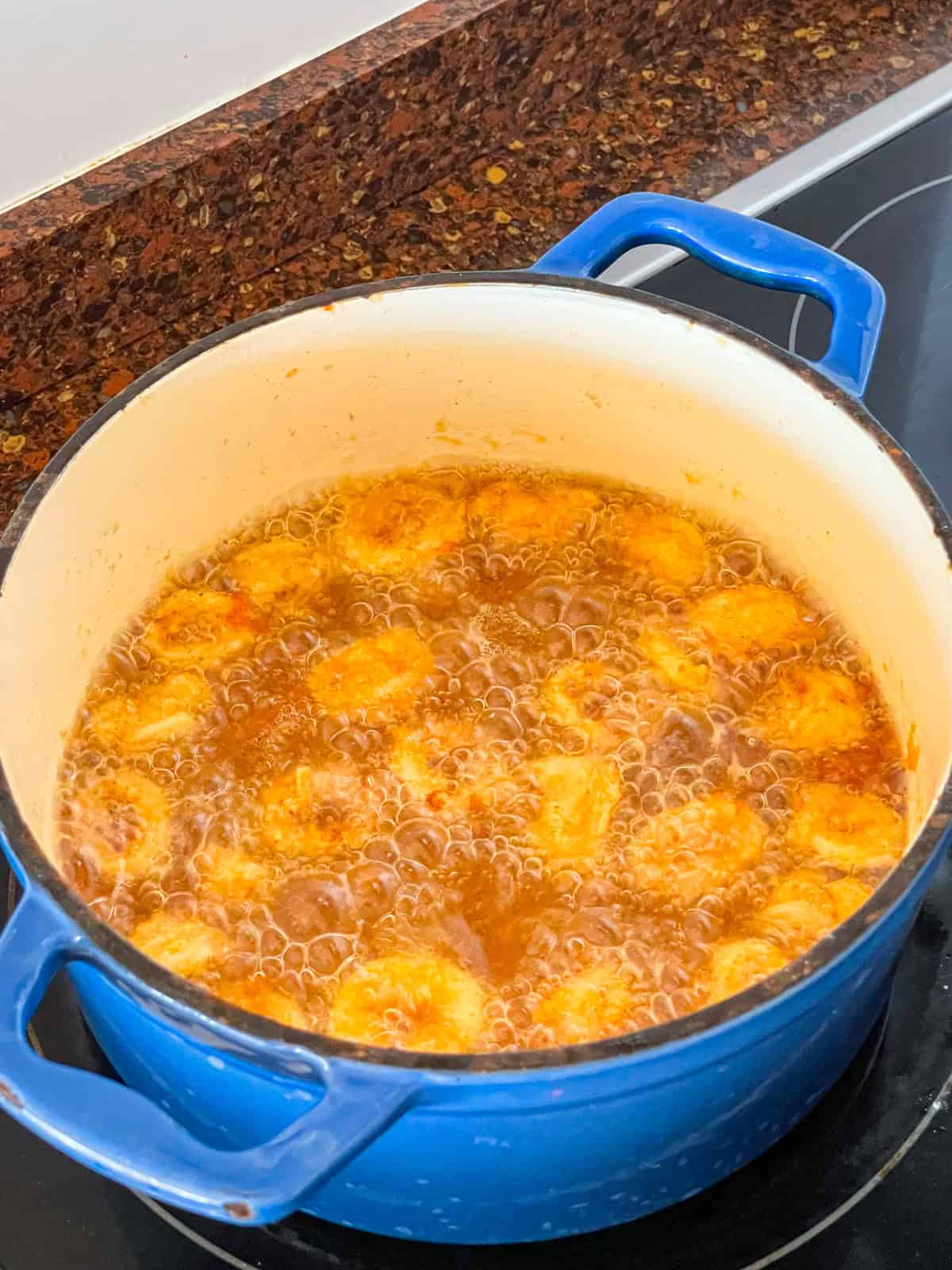
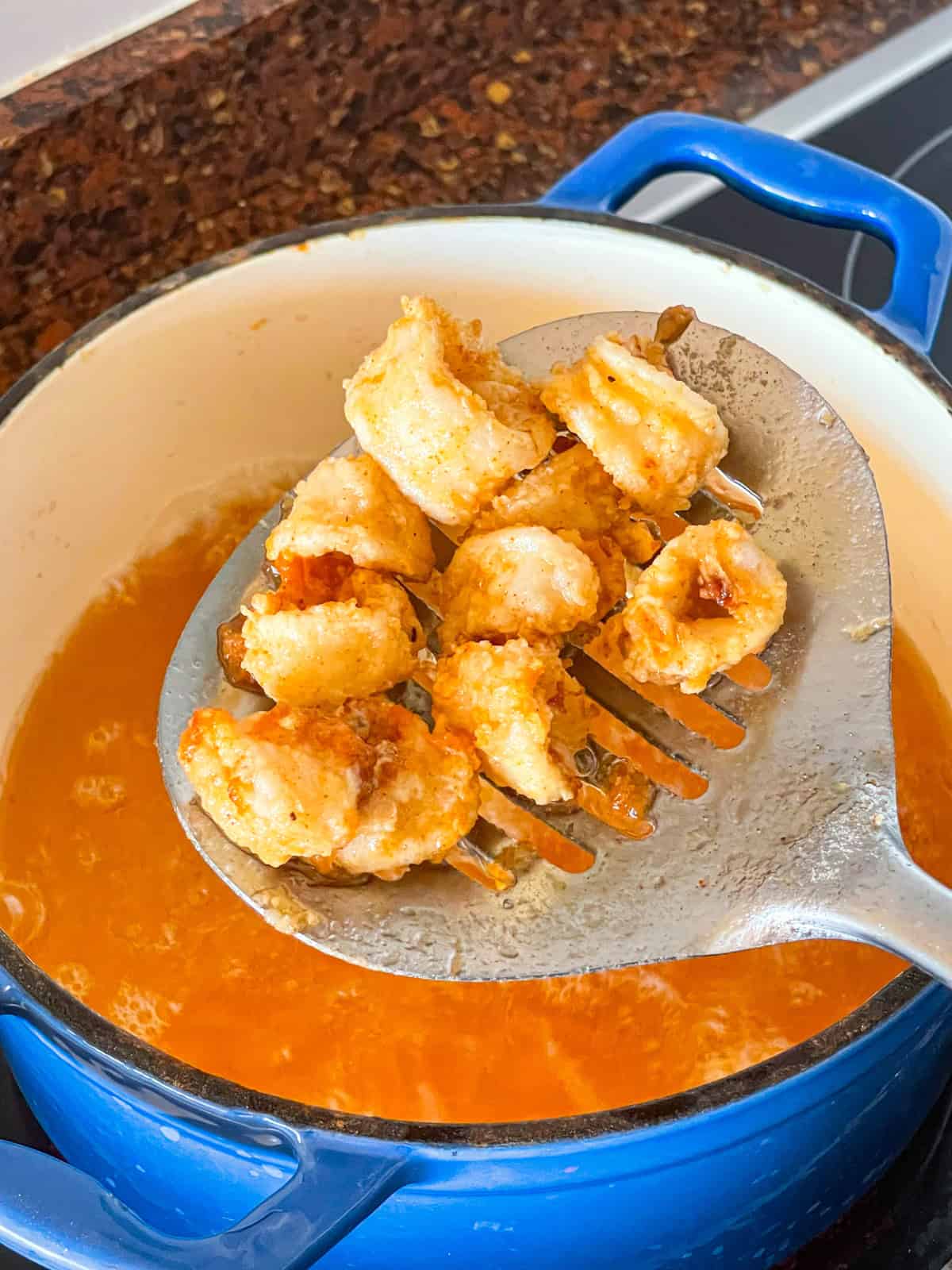
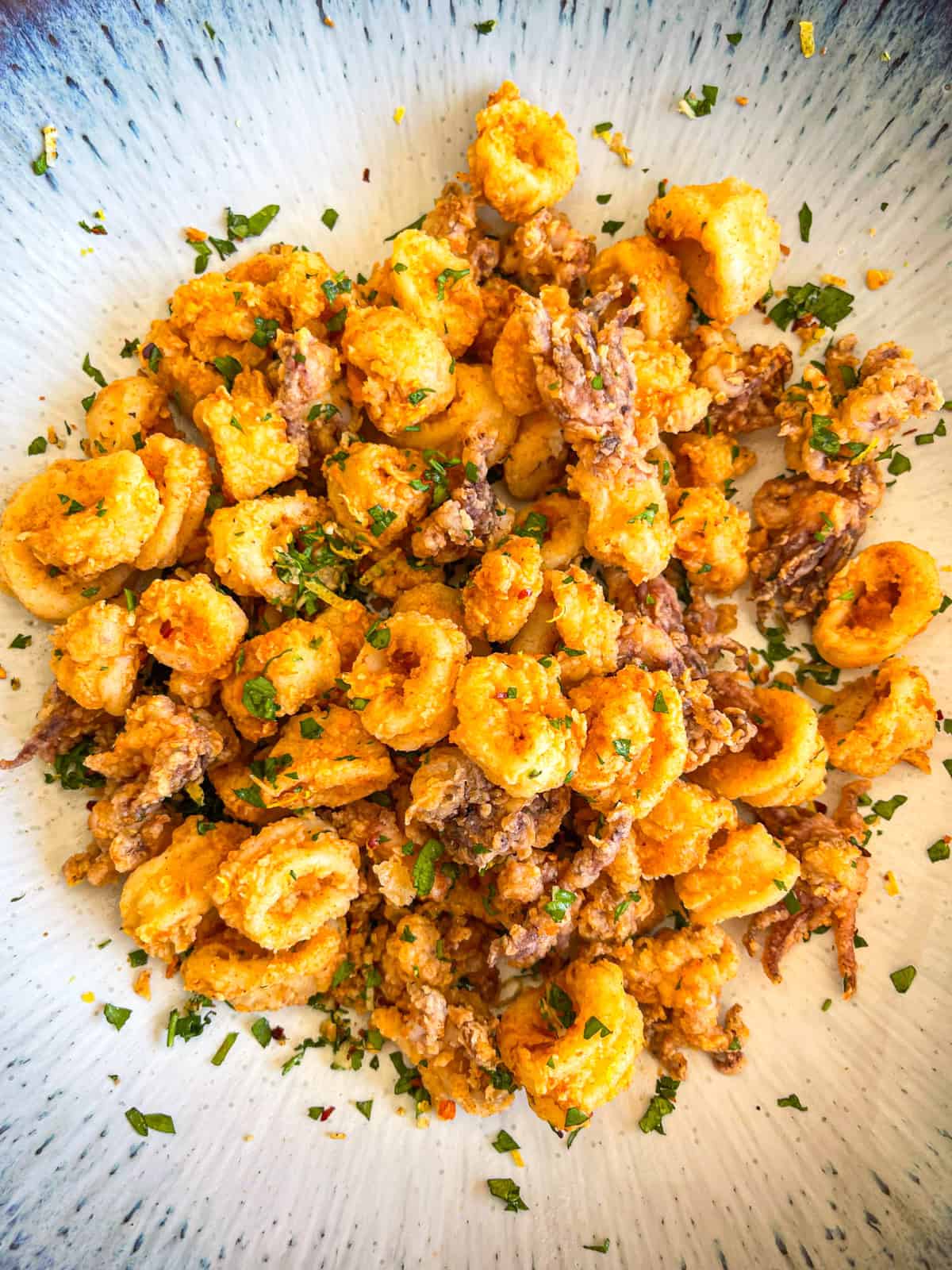
5. Toss and serve
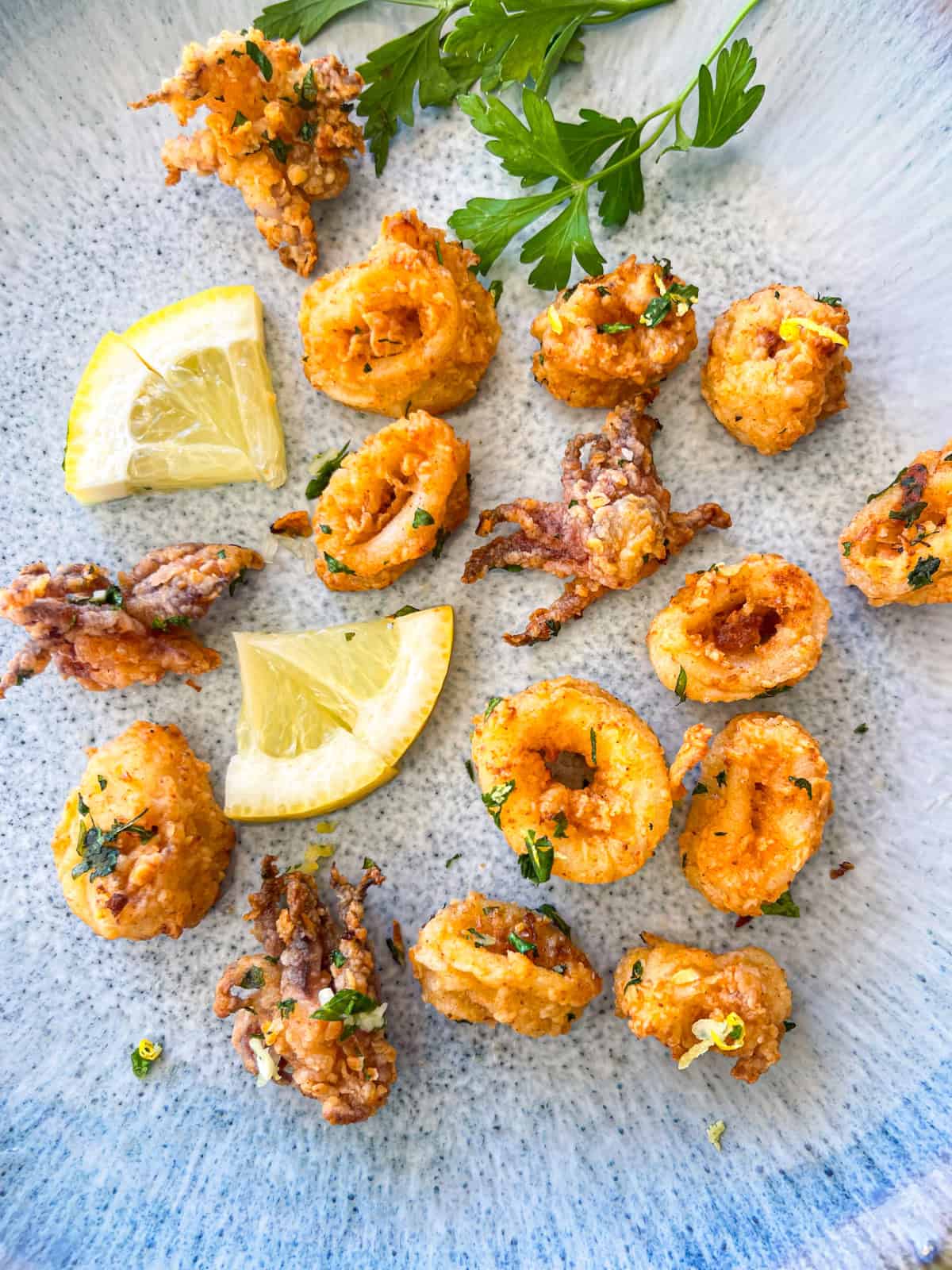
Drain briefly, then add the hot calamari to the bowl and toss gently with the gremolata.
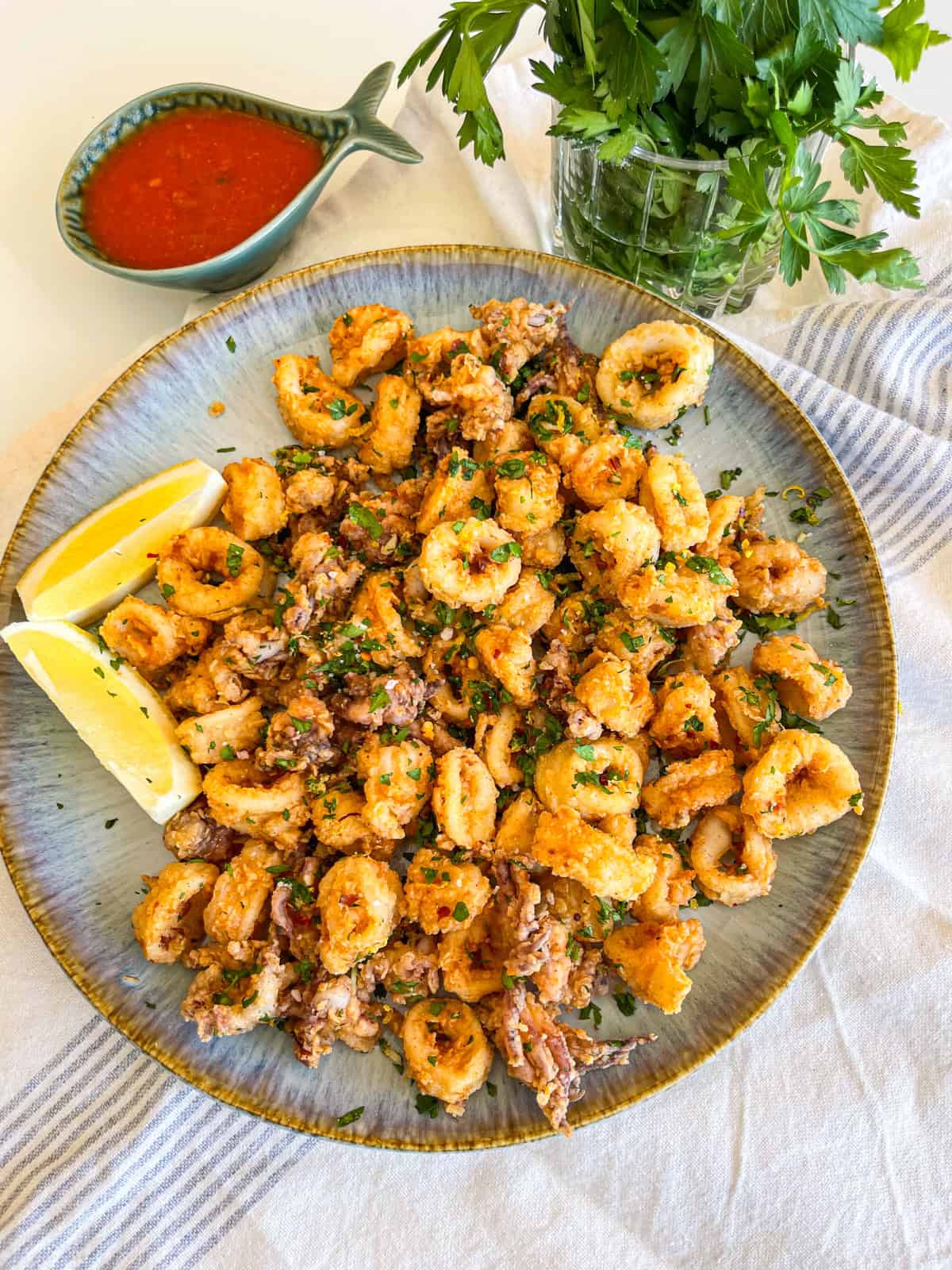
What sauce goes with fried calamari?
Marinara is the classic, and it's what I serve with this. My fresh red sauce is perfect for dipping if you want to make your own. For something creamy, go with spicy aioli or a classic tartar sauce. And if you're a cocktail sauce fan, it works here too. The gremolata already brings lemon and garlic, so any of them pairs well.
Do I need to soak calamari in buttermilk?
No. I tested a 30-minute soak against a quick dip, and there was no difference in flavor or texture. Toss the calamari in the buttermilk, let the excess drip off, and go straight to the dredge.
How do I keep fried calamari from getting rubbery?
If calamari has turned out rubbery on you before, it was probably overcooked, and thin rings are usually why that happens. They cook through long before the coating has time to crisp and brown. Cutting the rings to ¾ inch gives the coating time to turn golden while the calamari stays tender.
How do I keep the coating on fried calamari?
If you've had breading slide off in the oil before, two things usually cause it - frying right after dredging, and too much liquid carried into the flour. Squeeze off the excess buttermilk before dredging, then let the coated calamari rest for 10 minutes so the flour hydrates and grips the seafood.
Can I use frozen calamari?
Yes. Thaw it completely in the fridge, then pat it dry before it goes into the buttermilk so the coating isn't diluted
Print
Crispy Fried Calamari with Lemon-Herb Gremolata
- Total Time: 26 minutes
- Yield: 2-4 1x
- Diet: Pescatarian
Description
Crispy fried calamari with a light, golden coating, tossed with a fresh lemon-herb gremolata while it's still sizzling. Thick-cut rings stay tender because the coating browns before the calamari can overcook.
Ingredients
For the calamari
- ½ cup buttermilk (or milk, see Notes)
- 1 teaspoon kosher salt, divided
- 1 pound calamari tubes cut into ¾-inch rings, tentacles left whole
- 1 ¼ cups all-purpose flour
- 1 tablespoon baking powder
- 1 ½ teaspoons paprika
- ½ teaspoon black pepper
- Neutral oil, for frying (about 2 inches in a Dutch oven)
For the gremolata
- ¼ cup flat leaf parsley, finely chopped
- 1 small garlic clove, minced or microplaned
- ¼ teaspoon red chili flakes
- Pinch of fine salt
To serve
- Marinara, for dipping
- Lemon wedges
Instructions
- Combine the parsley, lemon zest, garlic, chili flakes, and a pinch of fine salt in the bottom of your serving bowl and set aside.
- Whisk the buttermilk and ½ teaspoon salt together in a bowl, add the calamari, and toss to coat.
- In a wide dish, whisk together the flour, baking powder, paprika, pepper, and the remaining ½ teaspoon salt. Working in batches, lift the calamari from the buttermilk, squeeze off the excess so you don't transfer too much liquid into the dry mix, and dredge in the flour mixture until coated, shaking off any extra. Rest the dredged calamari on parchment for 10 minutes before frying.
- Heat about 2 inches of oil in a Dutch oven to 350 to 360°F. Fry in 2 or 3 batches, depending on the size of your pot, about 3 minutes per batch, until golden brown and cooked through. Drain briefly on paper towels or a rack, then add the hot calamari directly on top of the gremolata in the bowl and toss gently.
- Serve immediatelywith marinara for dipping and lemon wedges on the side.
Notes
Cut size matters. Rings cut to ¾ inch stay tender because the coating browns before the calamari overcooks. Thinner rings can turn rubbery.
No soak needed. A quick dip in buttermilk works just as well as a 30-minute soak.
Squeeze, then rest. Squeeze off excess buttermilk before dredging, then rest the coated calamari for 10 minutes so the coating sticks in the oil.
Fry in batches. Crowding drops the oil temperature and makes the coating greasy.
No buttermilk? Stir 1 teaspoon lemon juice or vinegar into ½ cup milk and let it sit for 10 minutes before using.
Frozen calamari: thaw completely in the fridge and pat dry before the buttermilk dip.
- Prep Time: 20
- Cook Time: 6
- Category: Appetizers
- Method: Frying
- Cuisine: Mediterranean


Leave a Reply