


Black sea bass is our fish in the spotlight today, but it's really this crispy-skin searing method doing the work, the one I come back to for nearly any skin-on white fish fillet. Salt, pepper, a little fresh garlic, and whatever sauce I'm loving that week makes for a simple, spectacular plate. This time it's romesco.
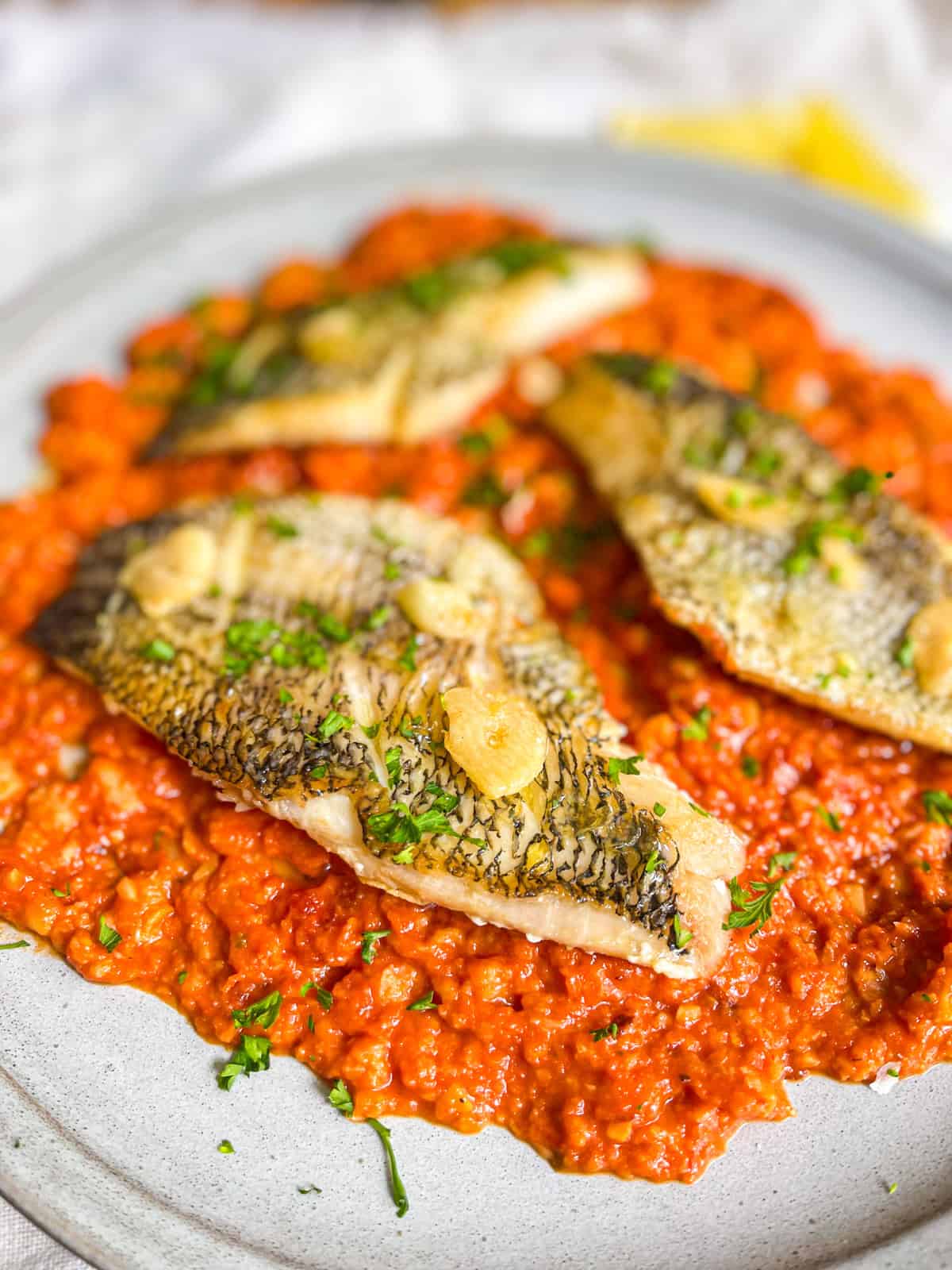
If crispy skin and a good sauce is your love language, you're in good company. I'm using my Smoky Romesco Sauce here, a Catalan sauce that traces it's origin story back to local fishermen creating flavors to dress up day-old fish. So imagine how spectacular it is on a good, fresh fillet! Make a batch of this smoky sauce from scratch, or grab a jar at the store if you're short on time.
Ingredients for this recipe:
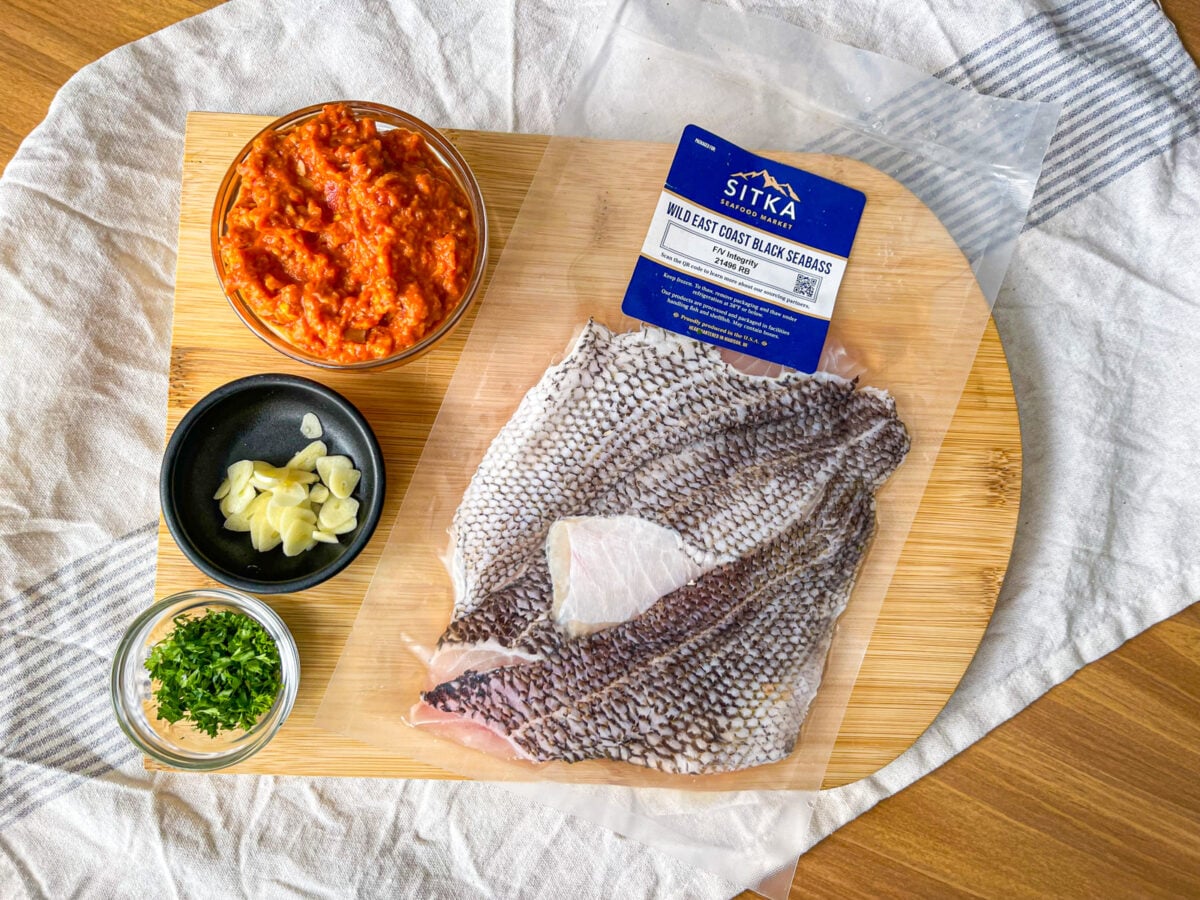
Black sea bass. Look for fillets with the skin left on and scaled, the whole method depends on that skin staying intact. If your fishmonger will scale it and pull the pin bones for you, take them up on it. Branzino fillets or sea bream work well here, too. Though cooking time will differ slightly.
Wondra flour. A light dusting on both sides gives the surface something to crisp against without going gummy. Regular all-purpose flour is a fine substitute, Wondra's just finer and gets you a thinner coat.
Garlic. Sliced thin and dropped into the hot oil right after you flip, it infuses the whole dish in under a minute.
Chives or parsley. Whatever's in the fridge. This is a fresh garnish, not a flavor pillar, so don't stress over which one.
Full ingredient list and measurements are in the recipe card below.
Why This Recipe Works
Black sea bass skin behaves less like a typical fish skin and more like duck skin. It's thick, loaded with collagen and fat, and if you treat it the way you'd treat a thinner fillet with a quick sear and high heat, you'll end up with something rubbery instead of crisp. Duck skin needs time and steady heat to render its fat down slowly until it crackles. Black sea bass skin needs a similar strategy.
That's the logic behind every technique choice here. The deep score gives the fat and collagen somewhere to escape as they render, instead of trapping everything under skin that just puffs and blisters. Medium heat, not high, gives that rendering process time to finish before the outside scorches. And pressing the fillet flat with a spatula for those first 20 seconds keeps the full surface of the skin in contact with the pan while it fights its instinct to curl away from the heat.
Thinner-skinned white fish like branzino don't need nearly as much convincing (more on that below), but for a skin this substantial, the lower-and-slower duck-skin approach is what actually gets you to crisp instead of stopping halfway there.
A Few Things That'll Make This Easier
Pan matters. A heavy-bottomed stainless skillet is what I use and recommend, it holds steady heat through both batches and gets you the crispest result. A lightweight stainless pan won't do this justice. If you're working in an unfamiliar kitchen without one (which is exactly how I shot this recipe), nonstick is a solid backup, you'll land a touch short of that same crispness but still get a good render without worrying about sticking.
Dry the fish. Pat both sides completely dry with paper towels before you season, surface moisture is what gets in the way of a good crisp.
The curl is normal. The second the skin touches the pan, it's going to try to curl away from the heat. That's not a sign anything's wrong, it's exactly why you're pressing it flat for those first 20 seconds.
Stage everything before the pan gets hot. This whole cook is done in about 5 minutes once the fish goes in. Garlic sliced, romesco and plates out. There's no time to go hunting for anything mid-sear.
Step-by-Step
1. Prep fish
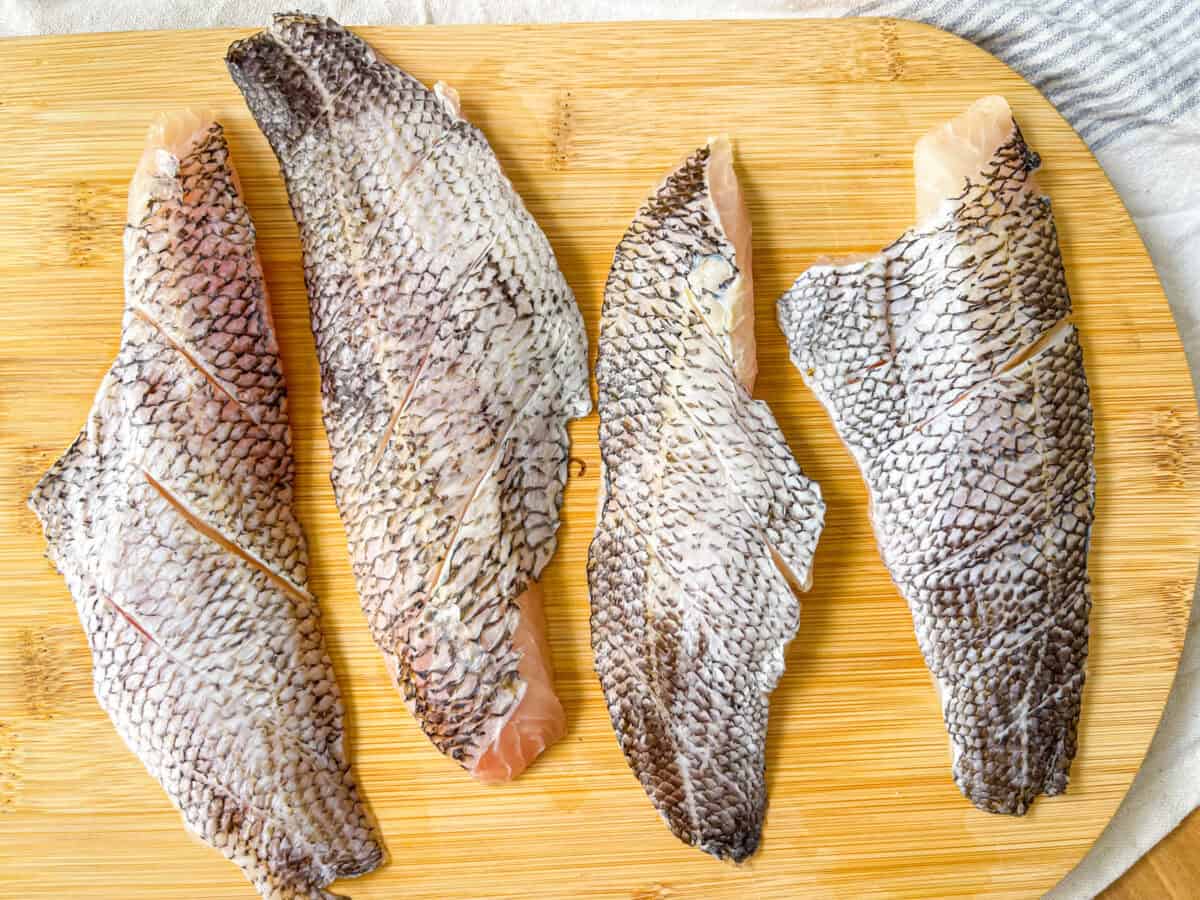
Let the fillets sit out of the fridge for about 15 minutes to take the chill off, then pat both sides completely dry with paper towels. Place a fillet skin-side up and make 3 to 4 diagonal cuts through the skin, about 1 inch apart and roughly ⅛ inch deep, enough to cut fully through the skin and just barely nick the flesh underneath.
2. Season and dust
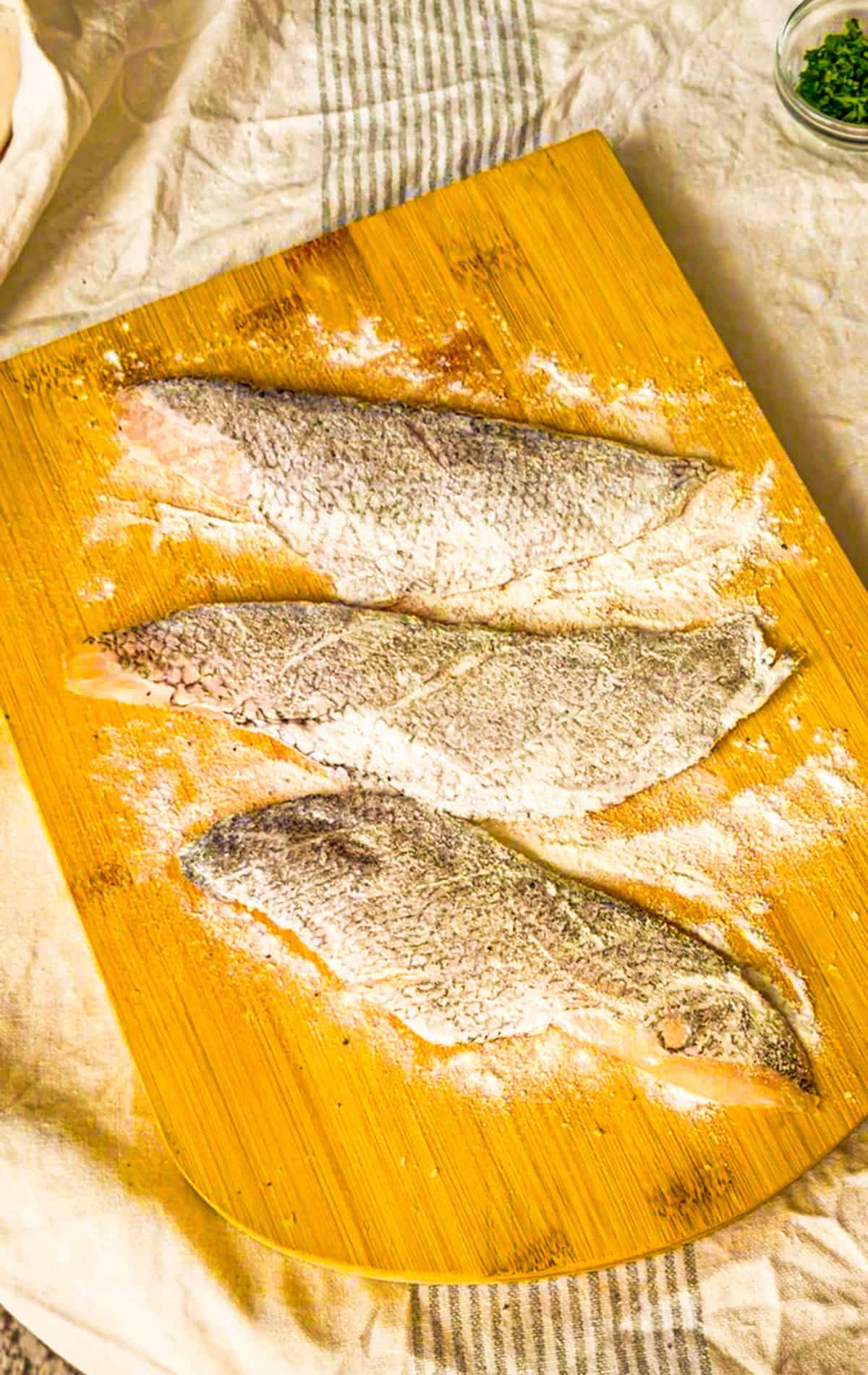
Season the flesh side with salt and pepper, the skin side with salt only (pepper tends to scorch over the longer skin-side cook). Dust a light, even layer of Wondra over both sides and tap off the excess. The skin should look matte, not caked.
3. Sear and Press
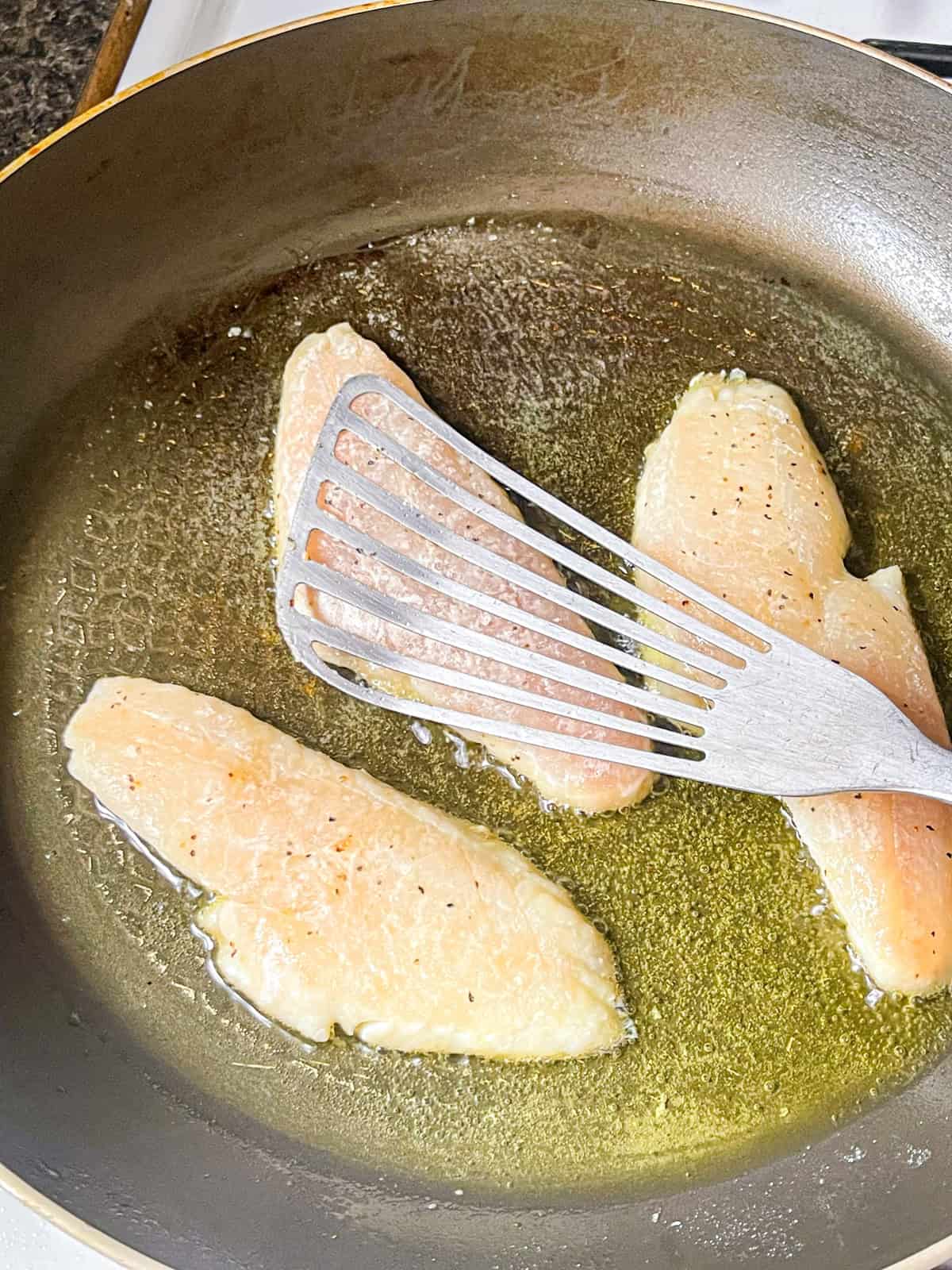
Warm a heavy-bottomed skillet over medium heat and add the olive oil. Wait until it's shimmering but not smoking before the fish goes in.
You'll cook these in two batches of three. Add the fillets to the pan one at a time, pressing each flat with a fish spatula for about 20 seconds before adding the next. By the time the last one's in, the first should already be holding flat on its own.
Once a fillet lies flat, leave it undisturbed for the remaining cook time, 3 to 4 minutes total on the skin side. It's ready when it releases easily from the pan and feels crisp when tapped.
7. Flip and finish
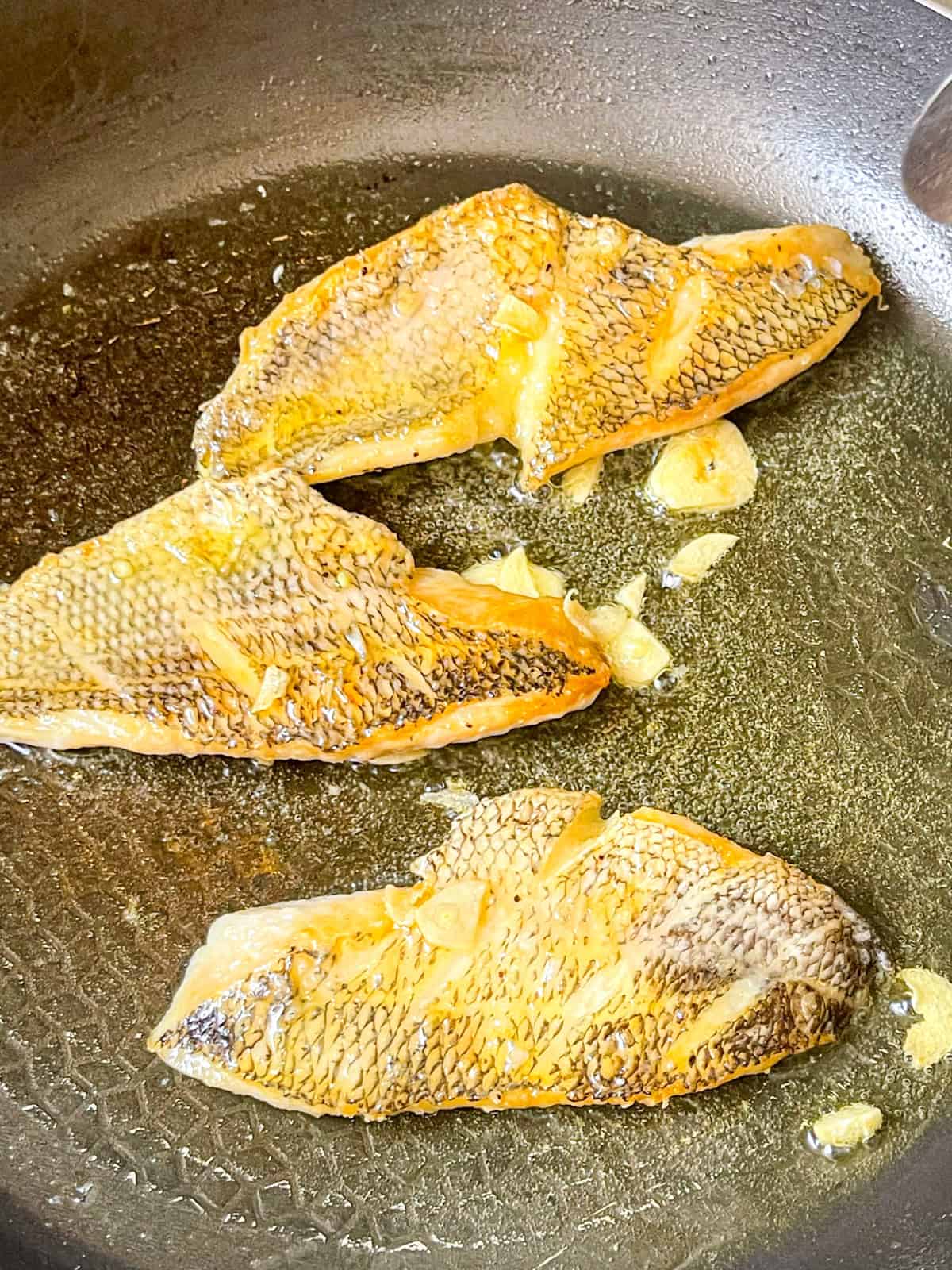
Flip to the flesh side. Drop the garlic slices into the oil now and spoon the sizzling oil over the crispy skin once or twice. Cook the flesh side for about 60 seconds, until it hits 135°F.
8. Repeat and plate
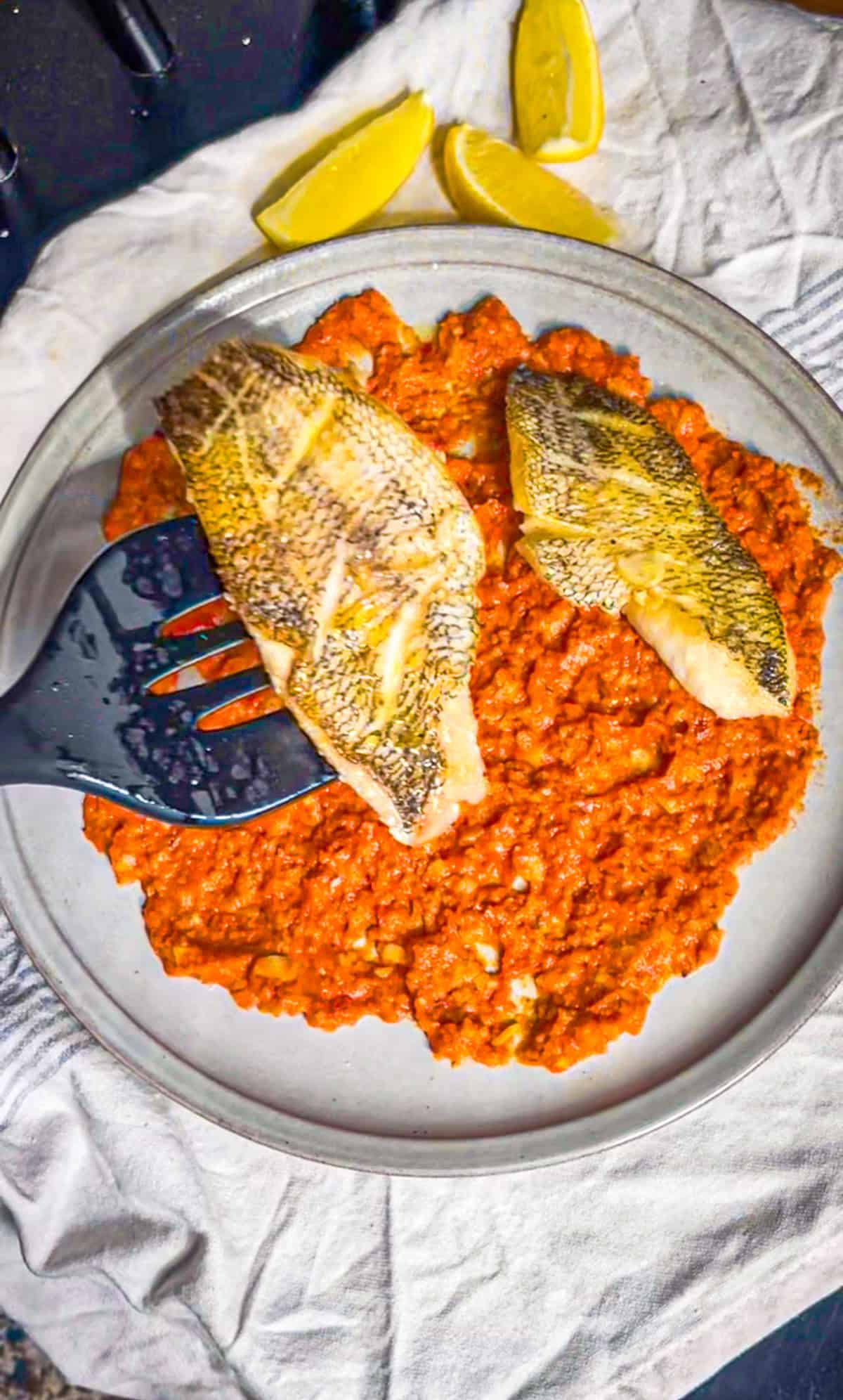

Repeat with the second batch of three, the rendered fat from the first usually carries you through without needing more oil. Serve immediately, skin-side up over romesco, finished with sliced garlic and a scatter of chives or parsley.
What does black sea bass taste like?
Mild and slightly sweet, with a firm texture that holds together well in a hot pan. It's not an oily fish, which is part of why the crispy skin here doesn't taste heavy even with rendered fat.
Is black sea bass the same as regular sea bass or branzino?
No, different species entirely, even though the names get used interchangeably. If you already like sea bass in general, black sea bass is an easy one to like, too. Branzino (also called European sea bass) has thinner, faster-crisping skin, which is why the technique eases up a bit for it. Black sea bass is native to the U.S. Atlantic coast, and that noticeably thicker, more collagen-rich skin is what drives this whole method.
Can you eat the skin?
Yes, as long as it's properly scaled, which is worth confirming with your fishmonger when you buy it. Once it's crisped up the way this method delivers, the skin isn't just edible, it's the best part.
This Technique Works for Branzino and Sea Bream, Too
If black sea bass skin behaves like duck skin, thick and slower to render, branzino and sea bream skin is closer to chicken skin: thinner, quicker to crisp, and far less demanding. You still want the same score and a dry fillet, but everything else eases up. A quick press is enough to keep the fillet flat while the skin sets, you won't be fighting the same curl for nearly as long. Expect the skin side to crisp in about 2.5 minutes, with the flesh side finishing in 1 to 2 minutes depending on thickness. Watch your fish rather than the clock, thinner skin can go from crisp to overdone faster than black sea bass will.
Print
Crispy Skinned Black Sea Bass
- Total Time: 15 minutes
- Yield: 3-4 1x
- Diet: Pescatarian
Description
Black sea bass with crisp skin, served over smoky romesco sauce. My most reliable method for dressing up a simple fish fillet. Ready in about 20 minutes.
Ingredients
- 1 lb skin-on black sea bass fillets (about 6 small fillets), scaled and pin bones removed
- 1 to 2 tablespoon Wondra flour
- 2 tbsp extra virgin olive oil
- 2 cloves garlic, thinly sliced
- Chives or fresh parsley, chopped, for garnish
- Fine sea salt and freshly cracked black pepper
Instructions
- Let the fillets sit out of the fridge for about 15 minutes, then pat both sides completely dry with paper towels. Place a fillet skin-side up and make 3 to 4 diagonal cuts through the skin, about 1 inch apart and roughly ⅛ inch deep, cutting fully through the skin and just barely nicking the flesh underneath. Season the flesh side with salt and pepper, the skin side with salt only, then dust a light, even layer of Wondra over both sides and tap off the excess.
- Warm a heavy-bottomed stainless skillet over medium heat and add the olive oil. Once it's shimmering but not smoking, lay the fillets in skin-side down, one at a time, pressing each flat with a fish spatula for about 20 seconds before adding the next, working in two batches of three. Once a fillet holds flat on its own, leave it undisturbed for the remaining cook time, 3 to 4 minutes total on the skin side, until it releases easily from the pan and feels crisp when tapped.
- Flip to the flesh side and drop the garlic slices into the oil, spooning the sizzling oil over the crispy skin once or twice. Cook the flesh side for about 60 seconds, until it hits 135°F. Repeat with the second batch, the rendered fat from the first usually carries you through without adding more oil.
- Serve immediately, skin-side up over romesco, finished with sliced garlic and a scatter of chives or parsley.
Notes
A heavy-bottomed stainless skillet gets the crispest results. A lightweight stainless pan won't render the skin properly. Away from your own kitchen and without one on hand, nonstick works as a backup, you'll land a touch short of that same crispness but still get a good render.
Wondra gives the thinnest, crispest coat. Rice flour or all-purpose flour can also be used.
Garlic is easy to skip if you're out, but it's a small effort for a real payoff, especially against the romesco.
- Prep Time: 5
- Cook Time: 10
- Category: Dinner
- Method: Sautéing
- Cuisine: Mediterranean




Leave a Reply