

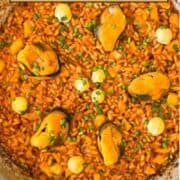
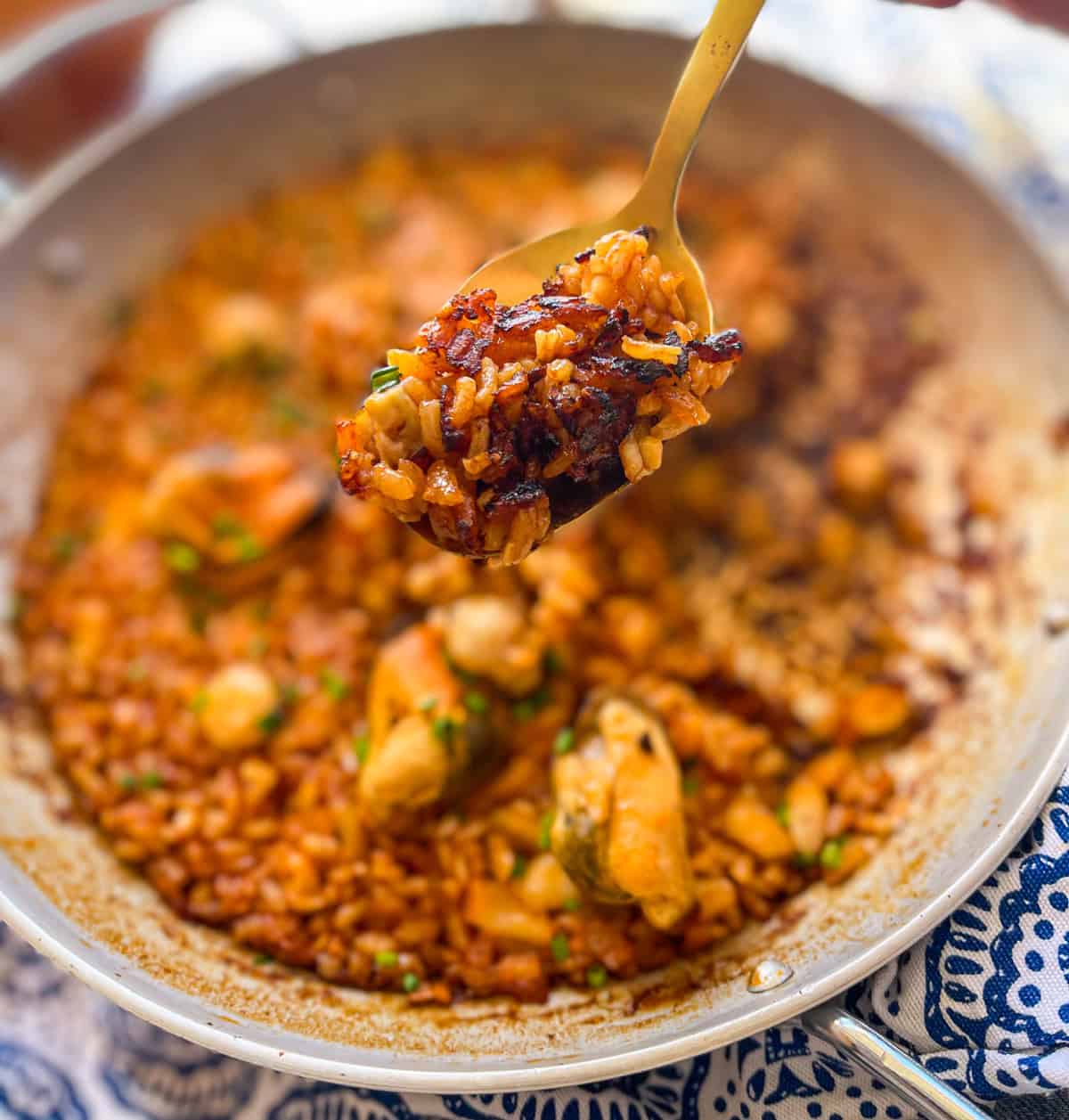
I've eaten paella all across Spain (it's our next-door neighbor here in Portugal), and sure, it's a tasty dish. But it's never been my favorite. You know what is my favorite? That crispy layer at the bottom of a really good pan of paella, called socarrat. That's the flavor and texture explosion I go crazy for, and it's the whole reason this Crispy Spanish Seafood Rice exists.
This recipe started with one question: how do I take a regular pantry rice (not a special order, looking at you, bomba) and build a process that guarantees crispy rice every time? Many rounds of testing later, here we are. Is it traditional? No. Is it a sizzling, crispy masterpiece? Why, yes. Thanks for asking.
This recipe is part of my Feast of Seven Tinned Fishes series. If tinned seafood is your love language, try my Seafood Pot Pie with Tinned Fish or Salmon Croquetas next.
Ingredients for Spanish Seafood Rice
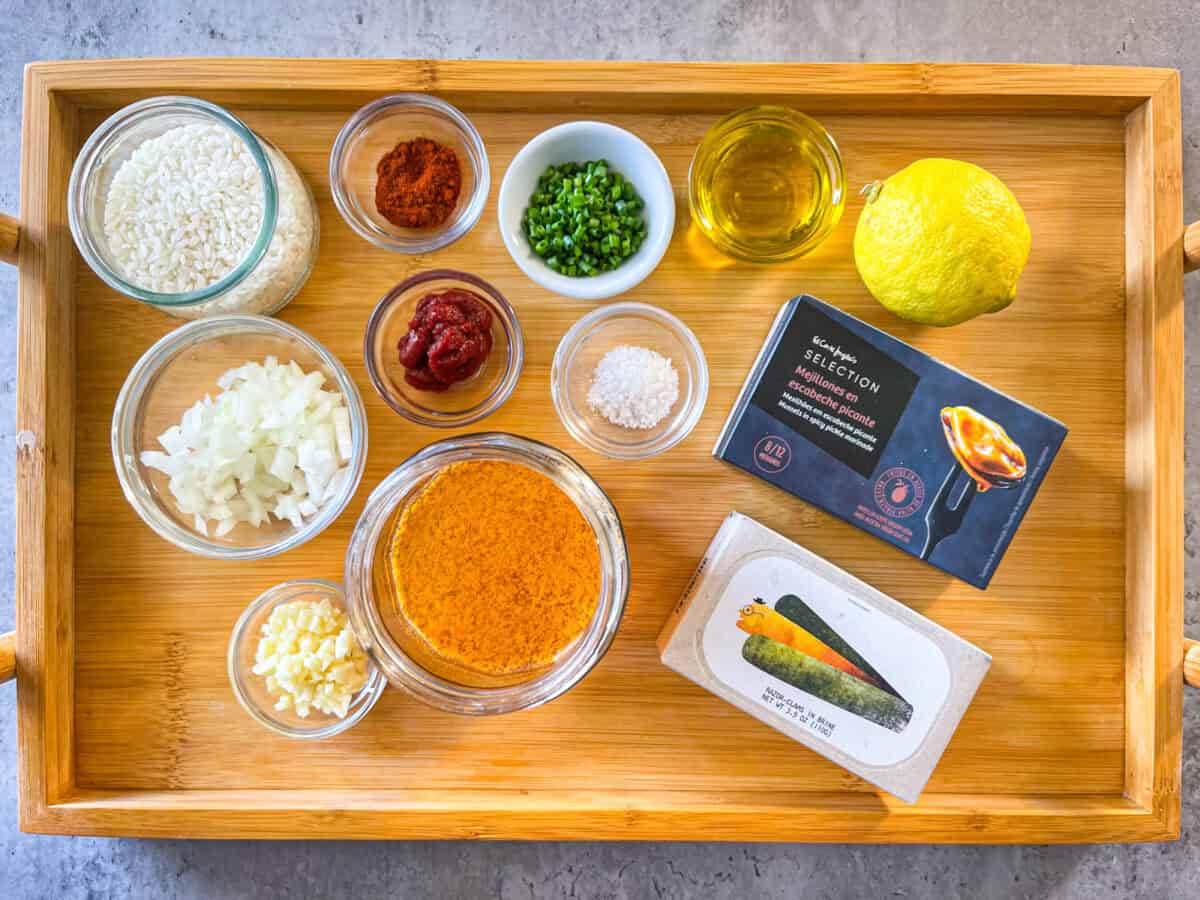
The rice. Use a medium-grain rice you can find at any grocery store: Calrose in the US, carolino in Portugal, or arborio. Its starch is what binds the crust.
The tinned seafood. I used mussels in escabeche and razor clams, but the method works with other tinned seafood too (more on that in the FAQ). The razor clams get chopped and scattered across the rice before it crisps, and the mussels go on top at the end.
The base. Olive oil, onion, garlic, tomato paste and smoked paprika, cooked down before the rice goes in.
Clam juice or seafood stock. One cup cooks the rice, with a little extra kept warm beside the pan in case it needs it.
The aioli. Mayonnaise, garlic, smoked paprika and lemon, whisked together while the rice rests.
Why This Recipe Works
It's covered. Uncovered, the way paella is cooked, my early tests took up to 45 minutes and kept demanding more broth, with the liquid pooling at the edge of the pan. A lid keeps the moisture moving through the whole bed of rice and roughly halves the time.
It uses less liquid than paella. Paella ratios are built for an uncovered pan, where much of the liquid leaves as steam. Covered, the rice only needs what it can absorb: about 1 cup of stock for ½ cup of rice.
A thin layer makes the crust. The crunchiest bottoms in testing came from a thin layer of rice, with less wet rice sitting on top of the crust to soften it. Half a cup of rice in an 8-inch paella pan, like the one you see here, hits that depth. A cast iron skillet works beautifully too: its weight smooths out a home burner’s hot spots for an extra-crunchy, even crust.
A Few Things That'll Make This Easier
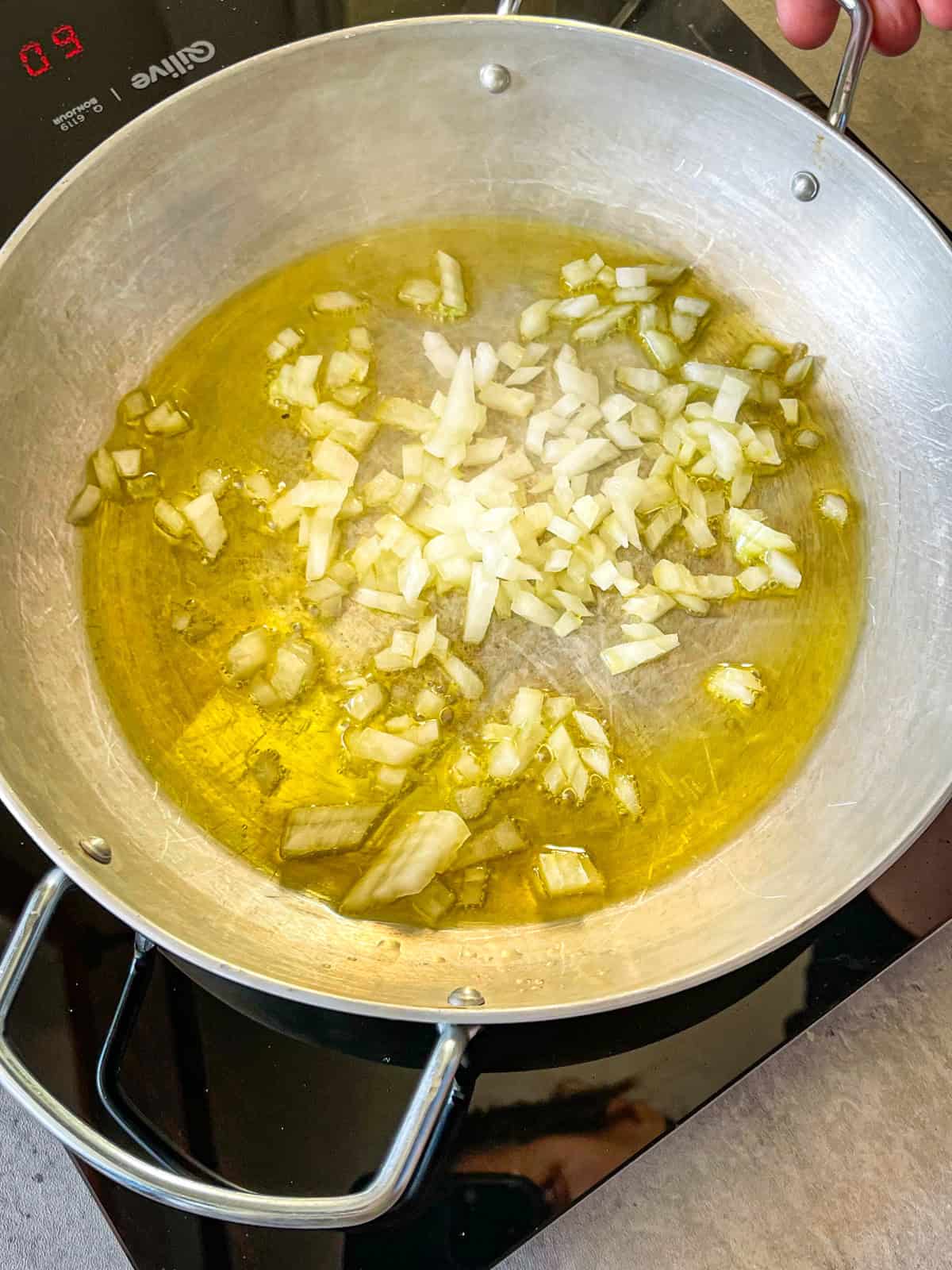
Trust the short onion time. Two to three minutes looks brief, but the onion keeps cooking through the tomato paste and the rice toasting, so it gets six to eight minutes in all.
Watch your burner size. If your pan is wider than your burner, the rim runs cooler. Shift the pan around now and then, both under the lid and while it crisps.
Listen for the sizzle. When the brothy bubbling turns into a sizzle, the water is gone and the oil has taken over. That's where the crust begins.
How to Make Crispy Spanish Seafood Rice
1. Build the base
Soften the onion in olive oil, then add the garlic.
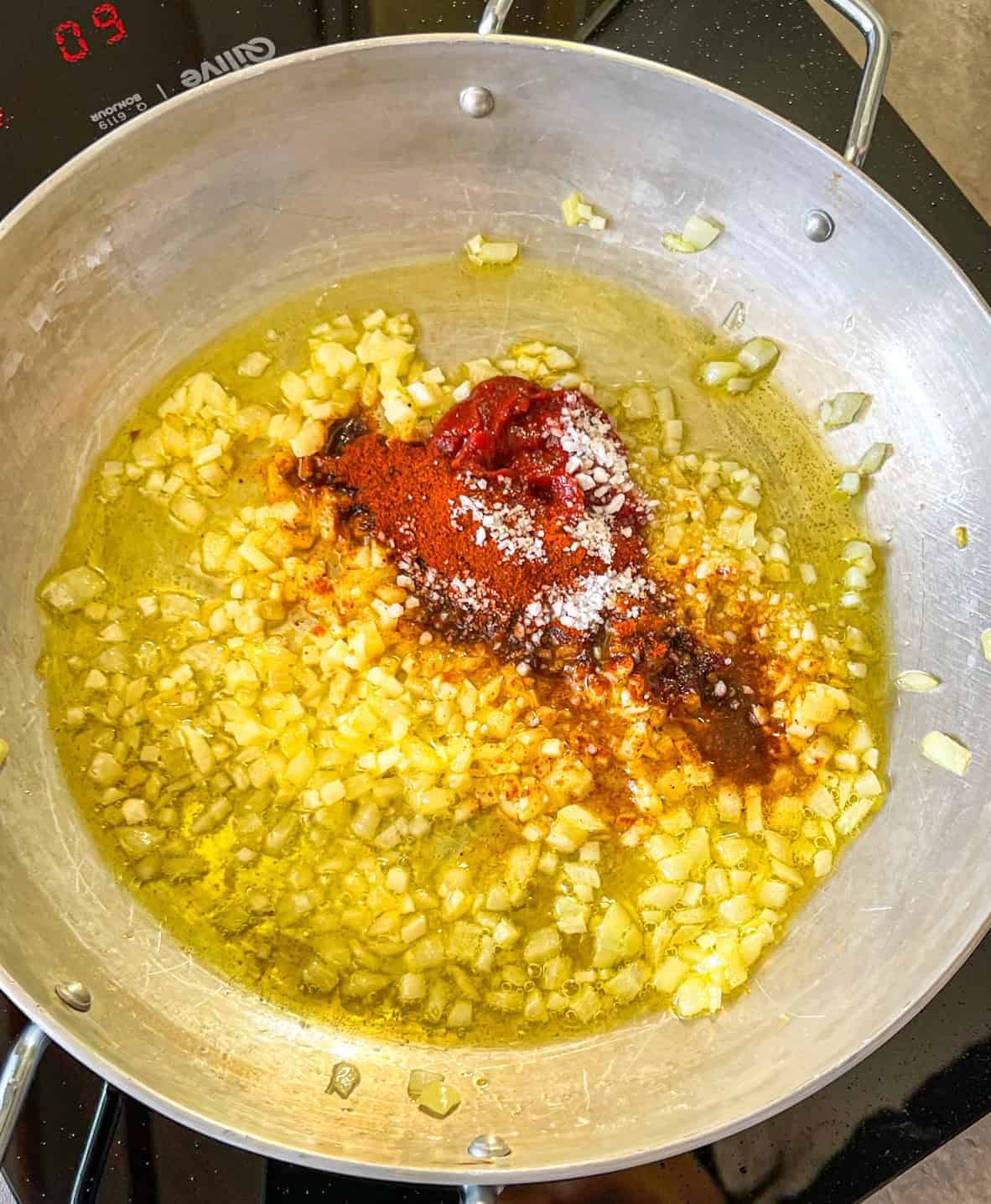
2. Bloom the tomato paste
Cook the tomato paste, paprika and salt until darkened.
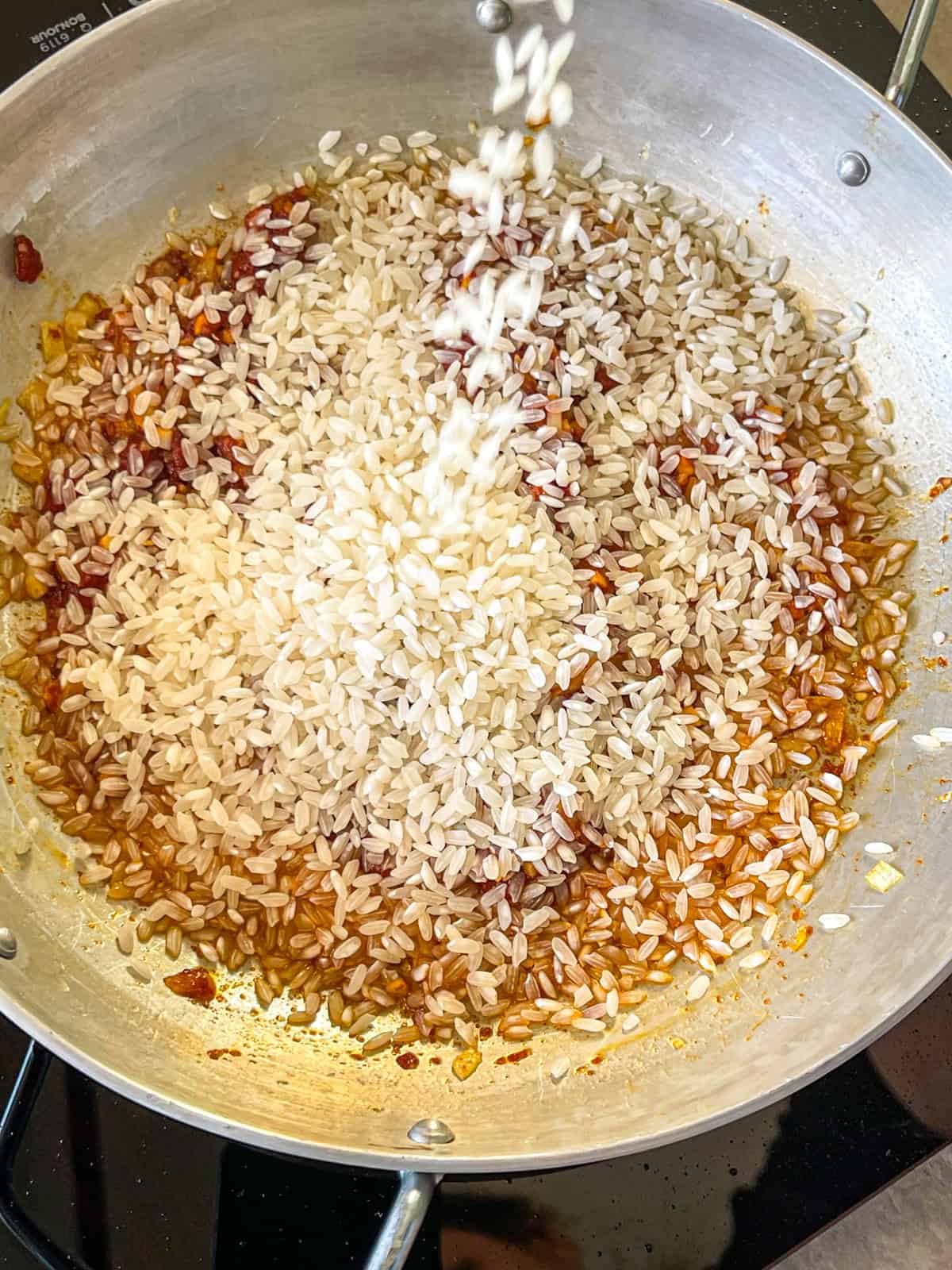
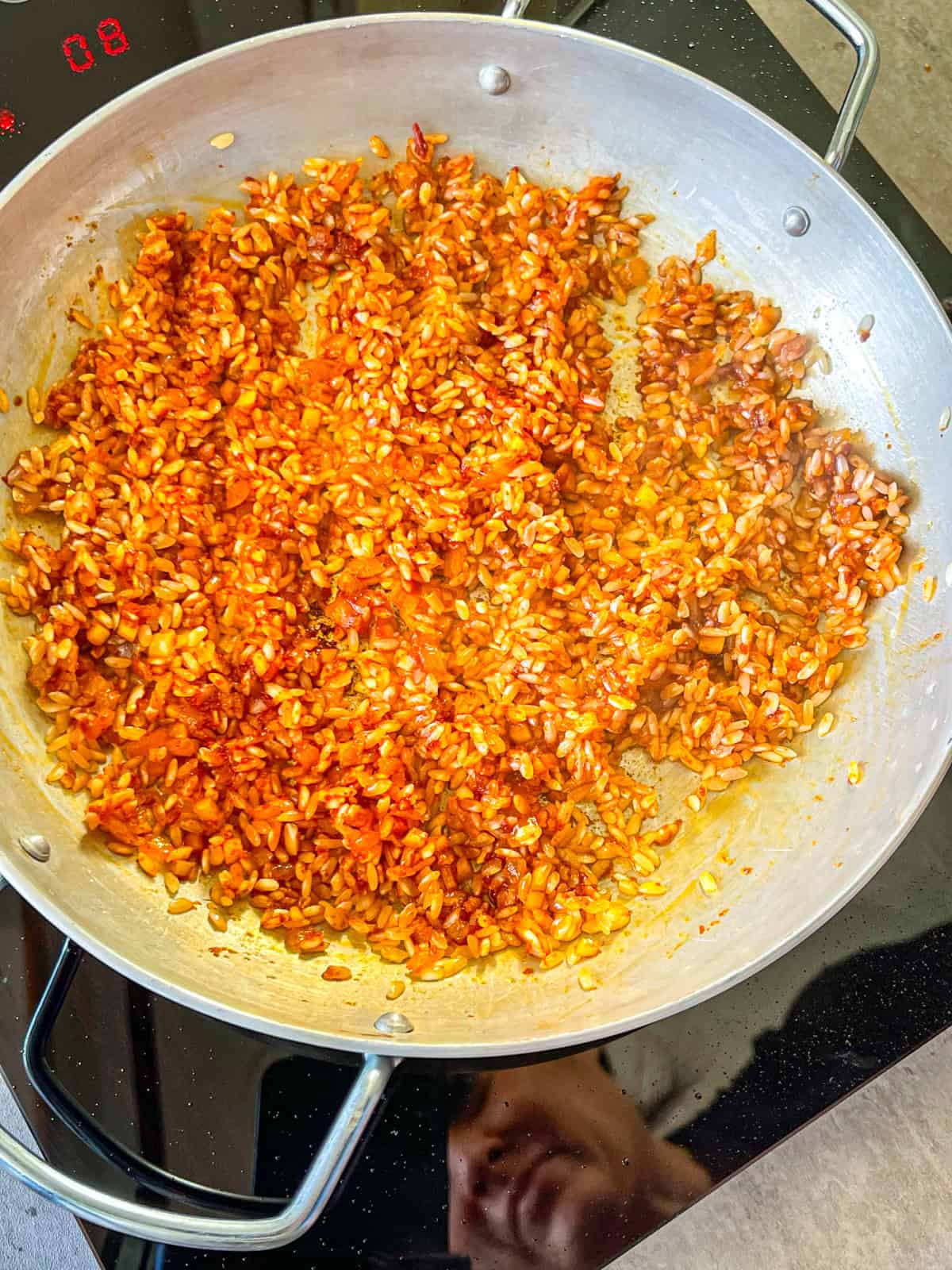
3. Toast the rice
Stir the rice until every grain is coated.
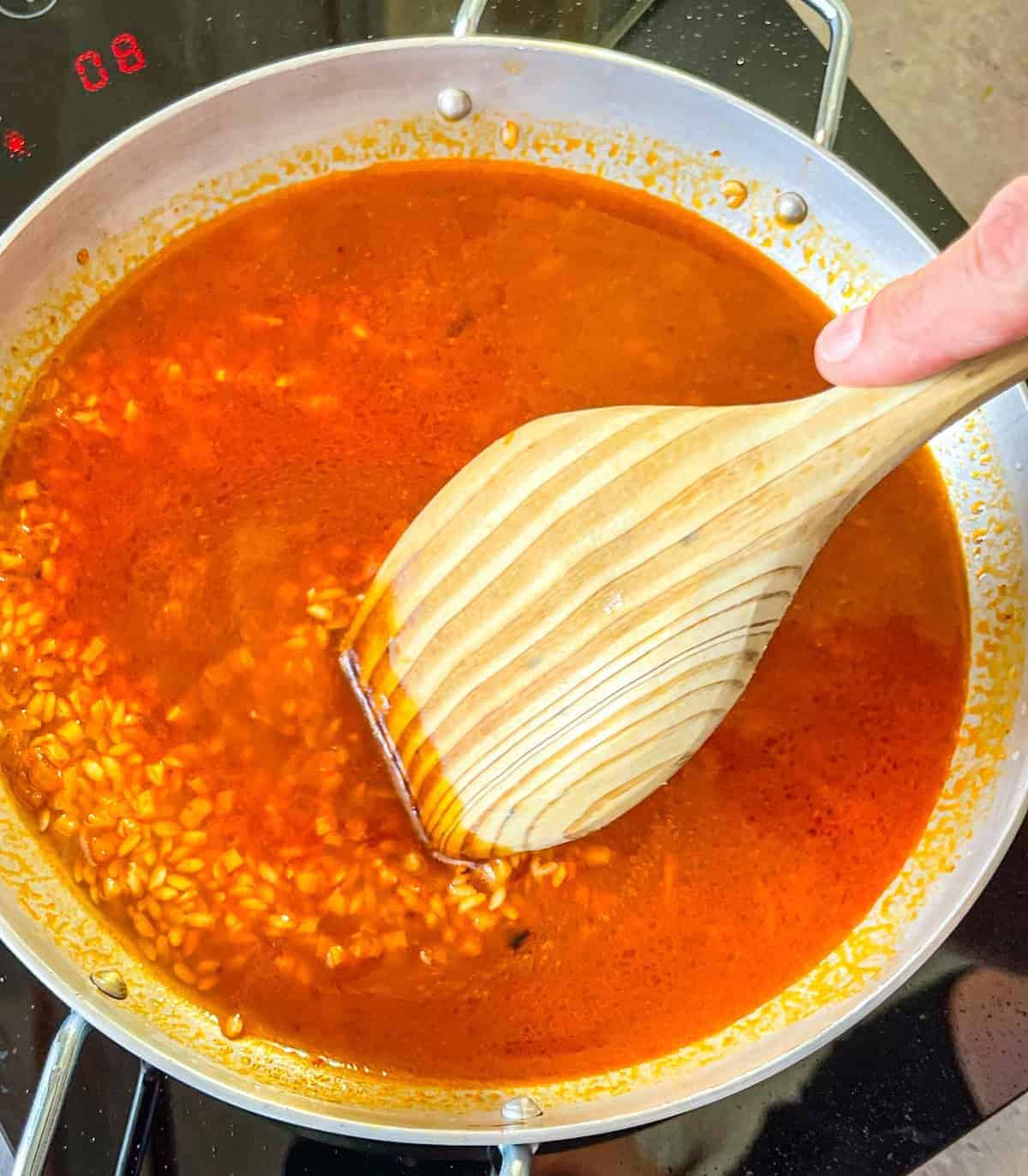
4. Cover and cook
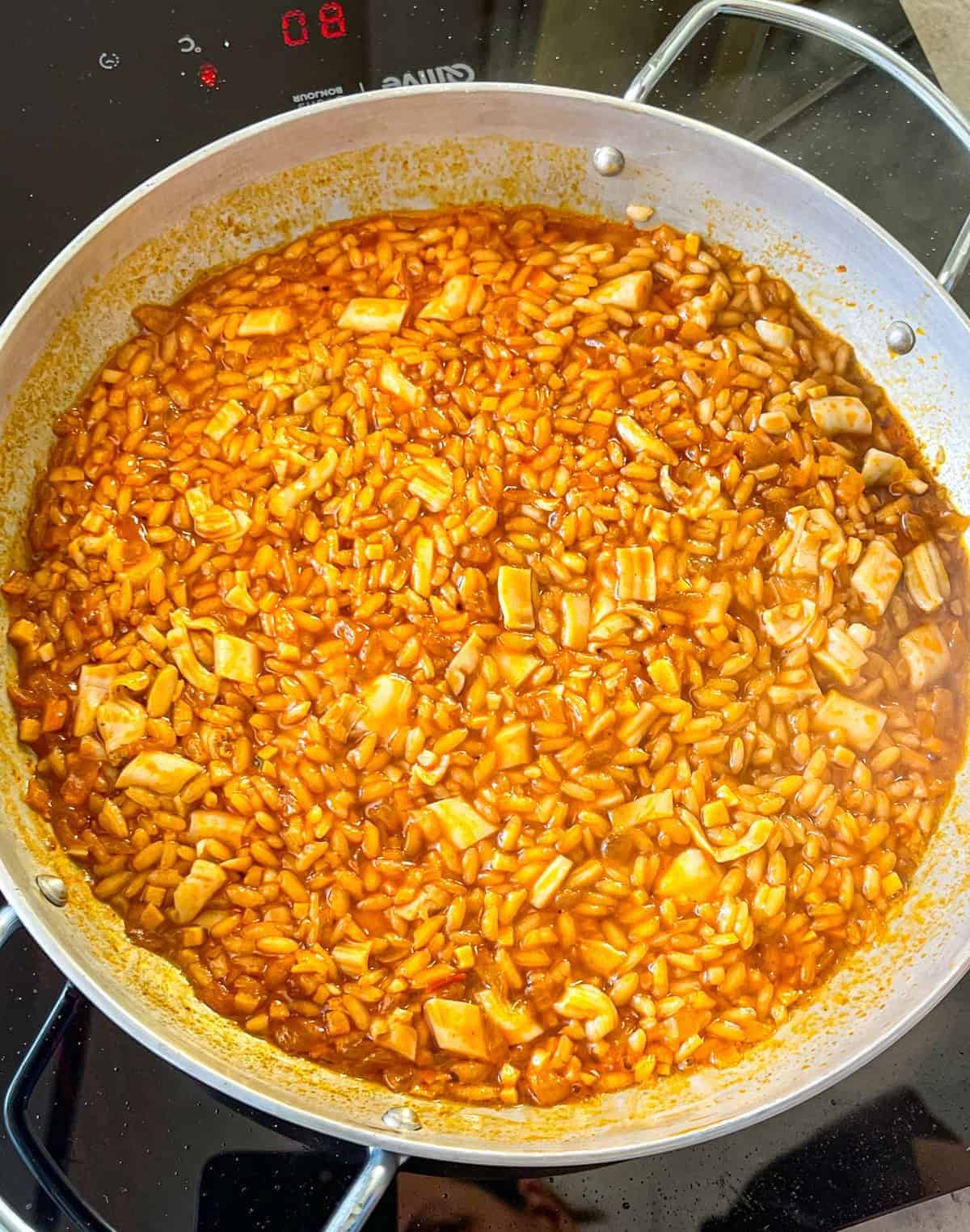
Add the stock, bring it to a boil, then cover and simmer. Taste a grain and check how much liquid is left.
5. Add the clams and dry it out
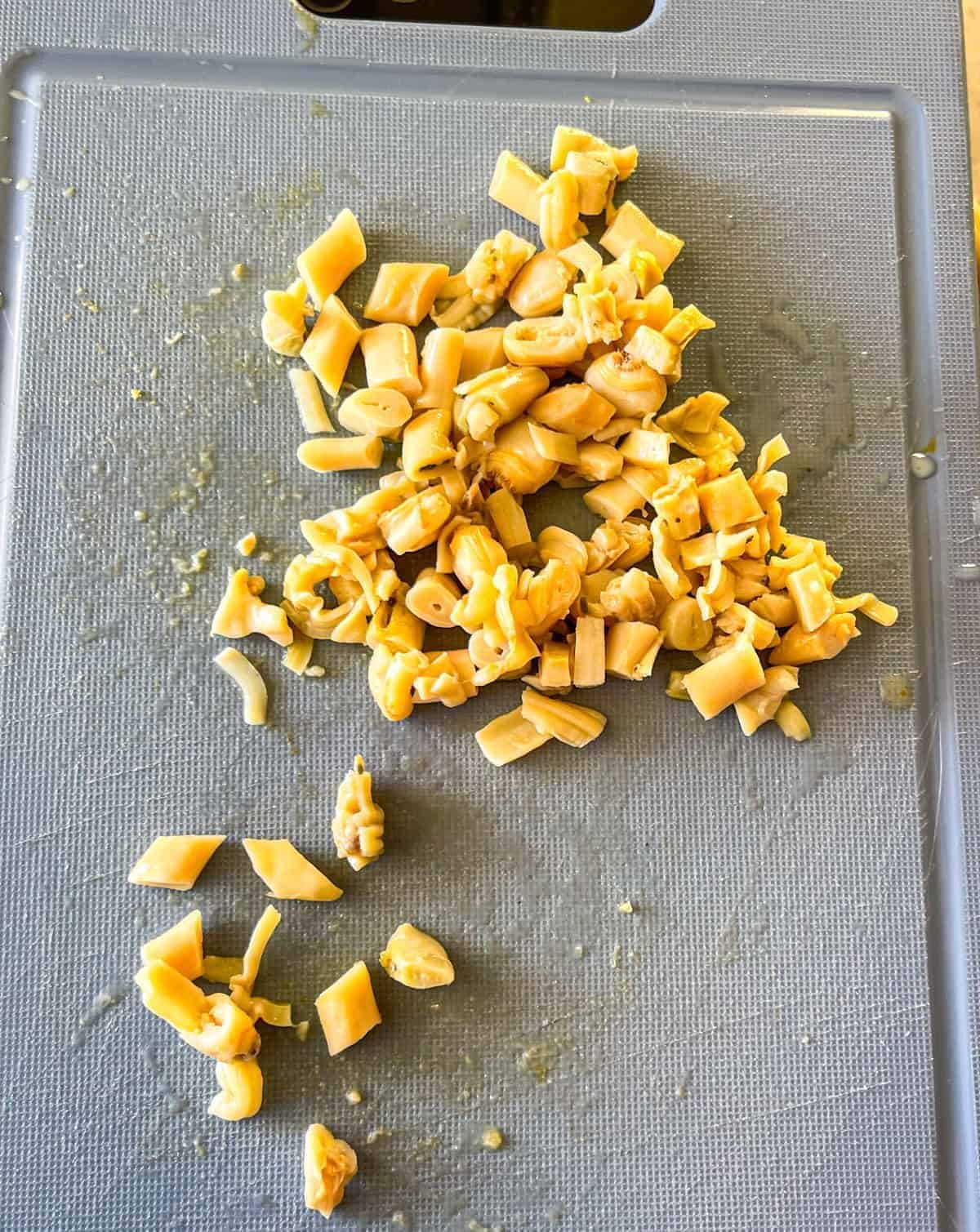
Scatter the clams across the top, gently distribute them, and cook uncovered until it sizzles.
6. Build the crust
Drizzle oil around the edges and cook undisturbed until you smell toasted rice.
7. Rest and finish
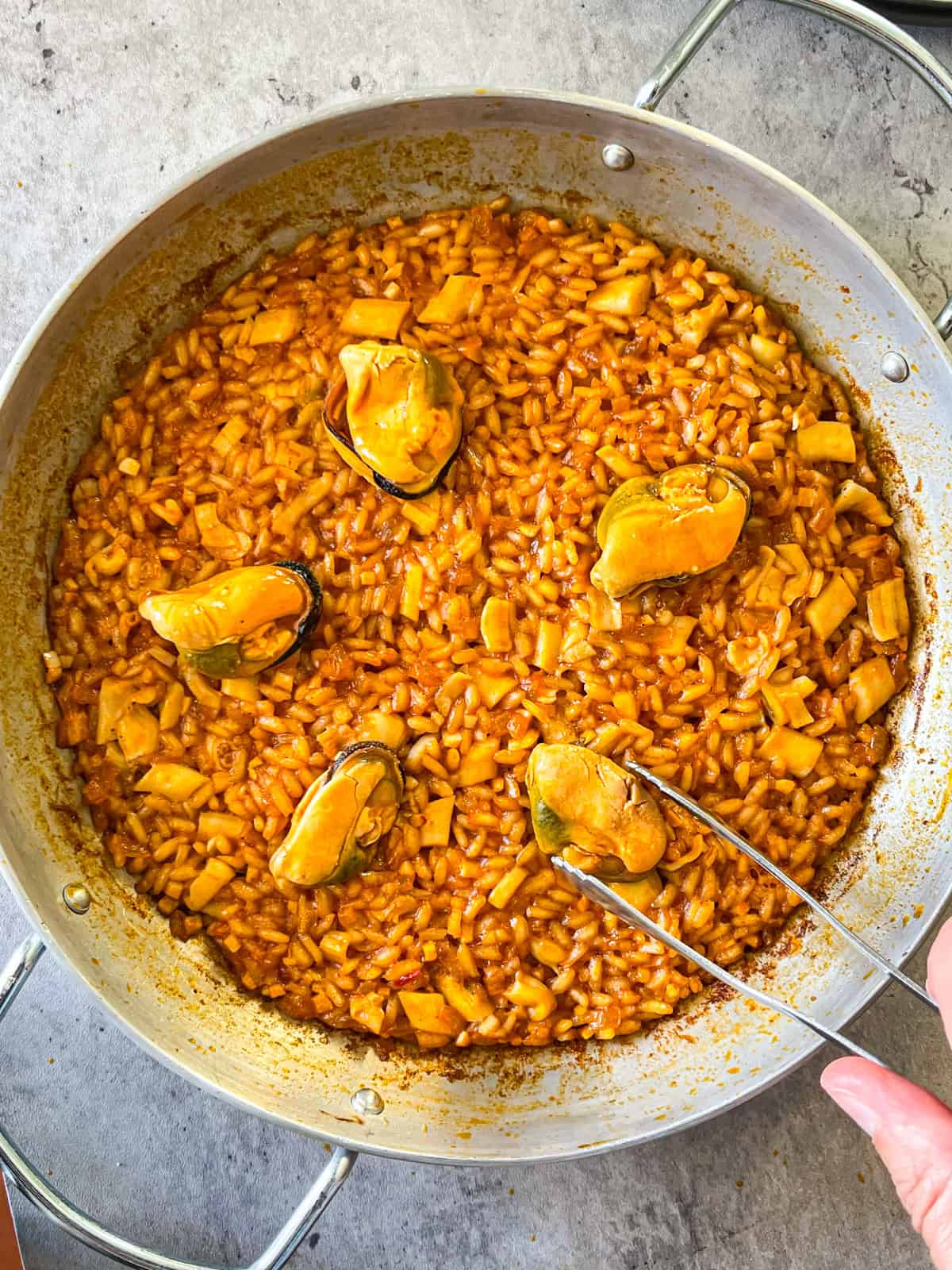
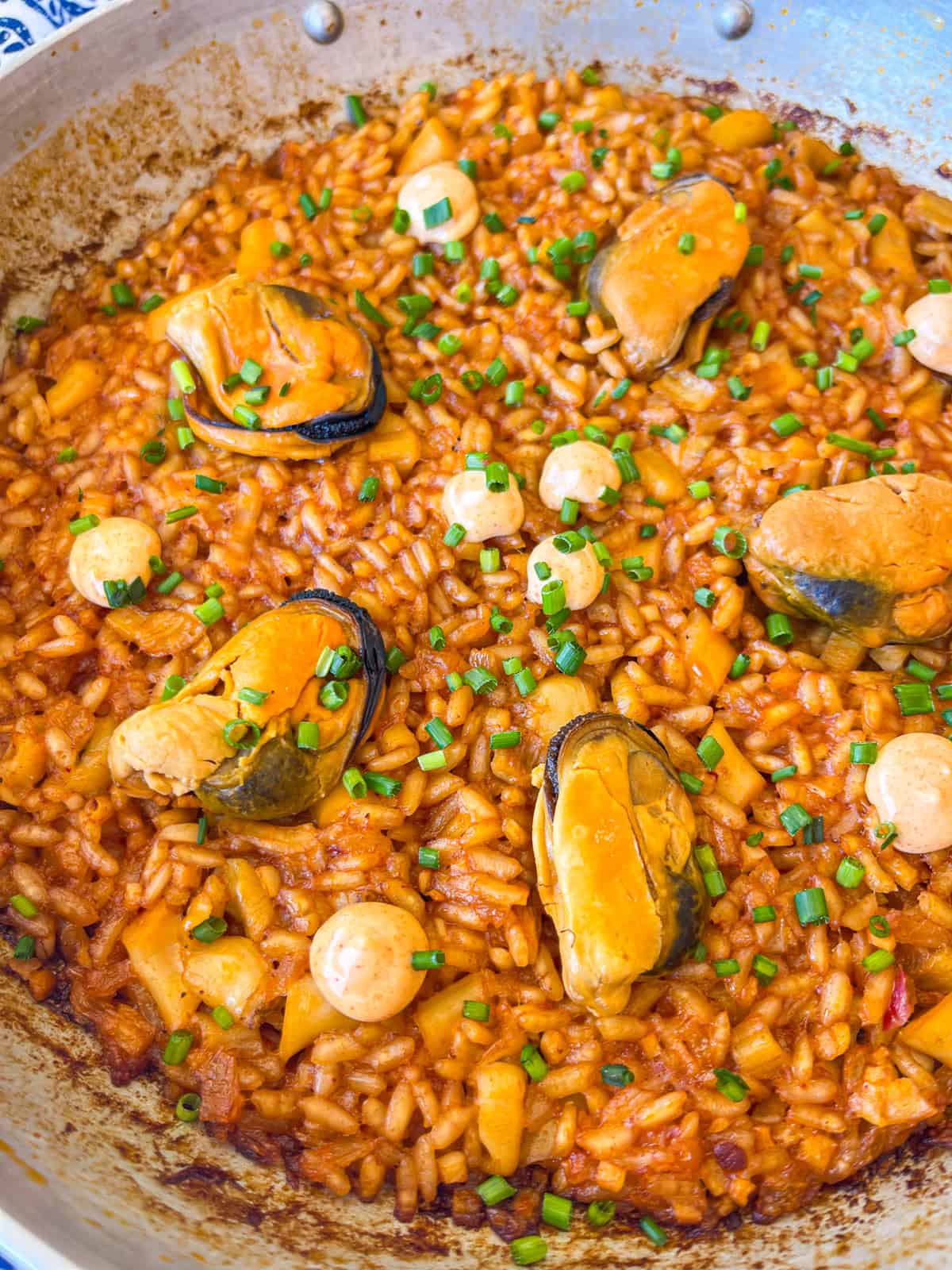
Rest on a damp towel top with the mussels and cover with a clean kitchen towel to finish steaming the rice and warm the mussels. Once finished, top with aioli and chives.
Is this paella?
No, and it doesn't pretend to be. Paella is cooked uncovered in a wide, shallow pan, never stirred, and usually made with bomba or another Spanish short-grain rice. This Spanish seafood rice dish borrows paella's flavors and its prized crispy bottom, but it's mostly covered, and made with everyday rice, so it works on a home stove every time.
What is socarrat?
Socarrat is the crispy, caramelized layer of rice that forms on the bottom of the pan. It's the most fought-over part of a paella pan. This recipe is built entirely around getting it.
What rice should I use?
A medium-grain rice like Calrose in the US, carolino in Portugal, or arborio. These have enough starch to bind a crust but cook up tender. Long-grain rice like basmati or jasmine is too dry and separate to crisp the same way.
Can I use other tinned seafood?
Yes. Drain anything packed in oil or escabeche and skip that liquid, since escabeche tastes sour in the rice. If your seafood is packed in brine, use the brine as part of the 1 cup of liquid. Sturdier seafood, like chopped octopus, squid, cockles or baby clams, goes across the top with the razor clams before the rice crisps. Pieces that should stay whole, like mussels, scallops, sardines or mackerel fillets, go on top during the rest.
Print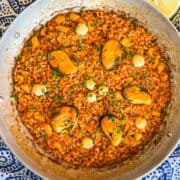
Crispy Spanish Seafood Rice
- Total Time: 40 minutes
- Yield: 2 1x
- Diet: Pescatarian
Description
Everyday pantry rice, steamed fluffy under a lid, then crisped into a golden bottom crust, with tinned mussels and razor clams and a smoky paprika aioli.
Ingredients
For the rice
- 2 tablespoon olive oil, plus about 1 tablespoon more for crisping
- ¼ cup small Spanish onion, diced
- 3 garlic cloves, minced
- 1 tablespoon tomato paste
- A generous ¼ teaspoon smoked paprika
- ¼ to ½ teaspoon coarse kosher salt
- ½ cup medium-grain rice (Calrose, arroz carolino or arborio)
- 1 tin mussels in brine or escabeche, drained
- 1 tin razor clams, drained and roughly chopped
- 1 cup clam juice or seafood stock, plus ½ cup more kept warm beside the pan
- Lemon wedges, for serving
- 2 tablespoon fresh chives, thinly sliced
For the aioli
- 3 tablespoon mayonnaise
- 1 small garlic clove, grated
- ¼ teaspoon smoked paprika
- 1 ½ tsp lemon juice
- A pinch of salt
Instructions
- In an 8-inch paella pan or cast iron skillet with a lid, soften the onion in 2 tablespoons olive oil over medium heat, 2 to 3 minutes. Add the garlic and cook 30 seconds. Add the tomato paste, paprika and salt, and cook 2 to 3 minutes, until darkened. Add the rice and stir to coat every grain, 1 to 2 minutes.
- Pour in 1 cup of stock, stir to level the rice, and bring to a boil. Reduce the heat to a steady simmer, cover, and cook 17 to 18 minutes. Uncover and taste a grain. There should be only a tablespoon or so of liquid left. If there's more, re-cover and cook another 5 minutes. If the rice is still firm and the pan is dry, add a few tablespoons of warm stock, re-cover, and cook 3 to 4 minutes more.
- Once the rice is tender, scatter the chopped razor clams across the rice and gently distribute them over the top, without digging into the rice below. Raise the heat to medium-high and cook uncovered about 3 minutes, until the sound of brothy bubbling turns to a sizzle.
- Drizzle about 1 tablespoon of olive oil around the edge of the pan in two full passes, plus a drizzle across the middle if your pan is wide. Cook undisturbed at medium-high, 5 to 7 minutes, until you smell toasted rice, rotating the pan if your burner is smaller than the pan. Check for a light crust to form where the rice meets the side of the pan, and push a fork to the bottom: it should meet firm, crisp resistance. Pull it off the heat the moment the smell turns sharp.
- Set the pan on a damp folded kitchen towel to stop the cooking. Arrange the mussels over the rice, cover with a dry kitchen towel, and rest 5 minutes. Meanwhile, whisk the mayonnaise, garlic, paprika, lemon juice and salt until smooth. Dot the aioli over the rice, scatter the chives, and serve in the pan with lemon wedges.
Notes
Check when the lid comes off. About a tablespoon of liquid left is right. If there's more, cover and cook another 5 minutes. Once the rice is tender and the liquid is gone, move on to the clams and the crisp.
Crust cues. Plan on 5 to 7 minutes from the sizzle. Look for a light crust at the edge, and a fork pushed to the bottom should meet firm, crusty resistance. Pull the pan the moment the toasted smell turns sharp.
Damp towel. It stops carryover cooking, which keeps a golden crust from turning burnt, especially in cast iron.
Don't rinse the rice. The surface starch binds the crust.
Doubling. Use a larger skillet rather than a deeper layer, and drizzle oil across the middle once the pan gets wide.
- Prep Time: 10
- Cook Time: 30
- Category: main dish
- Method: Stove Top
- Cuisine: Spanish

Leave a Reply